cut screen time, get more done: a focus playbook

To increase screen time productivity, you need more than just app limits—you need to understand your triggers, set your environment up for success, and make off-screen moments meaningful. This guide cuts through the noise to show you proven, realistic ways to reclaim your focus. Whether you're seeking fewer distractions or more time for deep work, these steps can help.
To boost screen time productivity, identify your main digital distractions, adjust iPhone settings to reduce interruptions, and reward focused time away from your device. Use built-in tools and mindful routines to track your habits and build an environment that supports sustained, meaningful work.
key takeaways
- Identifying your real digital triggers is the first step toward focused screen time.
- Small environment changes—like adjusting notifications—can have a major impact.
- Replacing background scrolling with purposeful breaks helps retrain your habits.
- Tools that reward time off your phone, like token systems, can support lasting change.
why less screen time leads to better productivity
Reducing time spent on your phone isn’t about demonizing technology—it’s about using it intentionally. Most people overestimate their ability to multitask, but research shows that task-switching reduces efficiency and increases mental fatigue. When your attention is fragmented by constant notifications or mindless scrolling, deep work becomes much harder.
Consider this: people spend an average of 6 hours and 38 minutes online across all devices each day (DataReportal, Digital 2025). Even reclaiming 30 minutes from low-value activities can improve your focus and leave more room for meaningful tasks. The goal isn’t zero screen time, but rather maximizing the value of the time you do spend online.
Apps like Pauza take a different approach by rewarding you for time spent off your device, rather than only blocking access. This helps shift your mindset from restriction to intention—making your time online count for more.
- Constant interruptions reduce deep focus
- Passive scrolling eats into productive hours
- Intentional use helps reclaim mental energy
spot your digital triggers and weak spots
Before you can change your habits, you need to know what’s really pulling your attention. For most people, it’s not a single app but a pattern—checking notifications after a meeting, scrolling social feeds before bed, or opening your phone during downtime. These triggers are often automatic and tied to specific feelings or routines.
Start by noticing when and why you reach for your device. Are you bored, anxious, or trying to avoid a challenging task? Write down these moments for a day or two. You’ll often find that certain situations—like waiting in line or winding down for the night—are your weak spots for unproductive screen time.
A screen time calculator makes those hours concrete, turning vague impressions into real data you can act on. Once you’ve identified your triggers, you can start to experiment with strategies to disrupt those habits.

make your phone work for you: settings that matter
Your iPhone has built-in features designed to help you manage distractions. The right settings can reduce the urge to check your phone, especially when you’re trying to focus. Start with notifications: Go to Settings > Notifications, and turn off alerts for non-essential apps. Keeping only time-sensitive or personal notifications can significantly reduce interruptions.
Next, try using Focus modes (Settings > Focus) to create custom profiles for work, rest, or study. For example, you can allow calls from specific contacts and silence all social media during work hours. This helps keep your attention where it matters most.
Finally, use Screen Time (Settings > Screen Time) to set app limits or downtime schedules. Even small adjustments—like limiting social media to 30 minutes a day—can help you notice how often you’re tempted to check your device.
- Open Settings and tap Notifications
- Disable non-essential app notifications
- Set up Focus modes for key parts of your day
- Review and adjust Screen Time limits weekly
replace background scrolling with active breaks
A major reason screen time feels unproductive is the tendency to scroll during every free moment. Instead, try replacing these moments with short, purposeful breaks. The goal isn’t to ‘do nothing’ but to give your mind a real pause.
For example, stand up and stretch for five minutes between tasks, or keep a notebook nearby for jotting down quick thoughts. Leaving your phone in another room during these breaks can help reduce the urge to check it out of habit.
If you’re working from home or in an office, set a visible timer for 25-30 minutes of focused work, then take a 5-minute break away from screens. Over time, these intentional pauses can boost your ability to focus when you return to your device.
use social motivation and non-cash rewards
Staying accountable is easier when you involve others or introduce small incentives. Friendly competition—such as betting who can reach the lowest screen time—can add a playful layer to your goals. For example, with apps that use in-app tokens (not real money), you can challenge friends to a screen time contest where the winner gets bragging rights or a reward you agree on.
Pauza, for instance, lets you accumulate tokens for every minute spent offline and build streaks or friendly bets with others. This approach doesn’t involve cash or gambling, but it does make progress tangible and social.
Choose rewards that actually motivate you, like earning an evening walk or a movie night after a week of lower screen time. The key is to make your progress visible and worth celebrating, even in small ways.
- Challenge a friend to a lowest-screen-time week
- Set up non-digital rewards for hitting your goals
- Use streaks or in-app tokens for extra motivation
reflect and adjust: making changes that last
Lasting improvements in screen time productivity depend on regular reflection. Once a week, review your usage trends—did your changes lead to more focused time, or did old habits creep back in? If something isn’t working, adjust your environment or try a new approach.
Compare your progress to the average screen time to see how your habits stack up. Remember, the goal is sustainable improvement, not perfection. Some weeks will be easier than others, and that’s normal.
Keep your adjustments incremental: remove one distracting app, tweak one Focus mode, or add one new break routine at a time. Over months, these small shifts add up to noticeable gains in productivity and well-being.
by the numbers
- People spend an average of 6 hours and 38 minutes online across all devices each day.— DataReportal, Digital 2025
Ready to put these strategies into practice? Try Pauza on your iPhone and discover a calmer, more focused way to manage your screen time.
Get Pauza on iPhone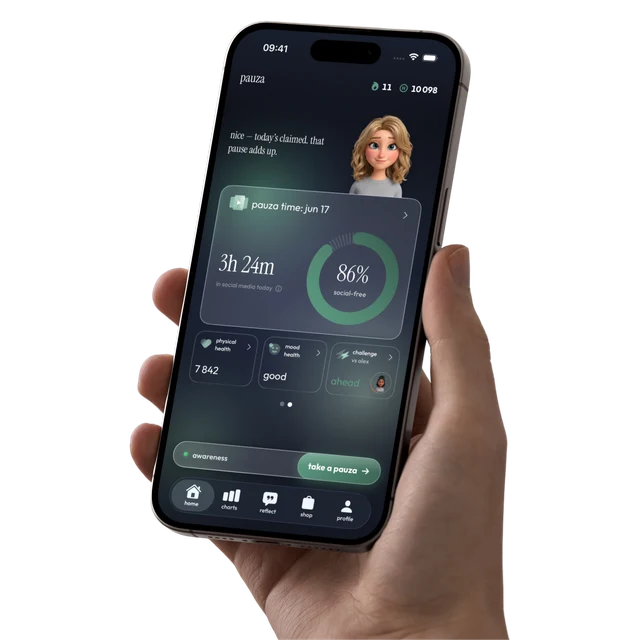
frequently asked questions
How can I tell if my screen time is hurting my productivity?
If you find yourself distracted, multitasking often, or struggling to finish important tasks, high screen time could be a factor. Reviewing your device's Screen Time reports can reveal patterns of unproductive use.
What are the best iPhone features for reducing distractions?
Focus modes, notification management, and Screen Time limits are the most effective built-in tools. Customizing these features to fit your schedule can help minimize interruptions and support focused work.
Are all screen hours equally unproductive?
No—time spent on focused tasks like reading, learning, or creating can be highly productive. The challenge is reducing low-value activities, such as passive scrolling or frequent app switching.
What’s a realistic first step to improve screen time productivity?
Start by disabling notifications for your most distracting apps and notice how that changes your habits for a week. Small changes make it easier to build momentum.
How does social accountability help reduce screen time?
Sharing goals or friendly competitions with others can make progress more fun and less isolating. Social motivation often leads to greater commitment to your screen time targets.
Can rewards really help me use my phone less?
Yes, but the rewards should feel meaningful to you. Even non-cash incentives, like earning tokens or celebrating streaks, can reinforce positive habits over time.
free tools
- screen time calculator — see what your daily hours add up to over a year
- average screen time statistics — how your usage compares to the latest data
- phone habit test — a 2-minute check of your phone habits