This is a self-reflection tool inspired by research scales on problematic smartphone use. It is not a clinical instrument and cannot diagnose anything. If phone use is seriously affecting your wellbeing, please talk to a mental health professional.
what the score means
0–9 · in control. Your phone works for you, not the other way around. Whatever you're doing, keep doing it.
10–18 · slipping. Some habits are on autopilot — the morning scroll, the reflex check. Nothing alarming, but this is the easiest stage to turn around.
19–27 · hooked. Your phone regularly wins against sleep, focus, or people in the same room. Most people in this range say they want to cut back — you're far from alone: 58% of U.S. adults say they use their phone too much.
28–36 · running your life. Phone use is interfering with things you care about, and willpower alone hasn't fixed it. Consider real friction — app blockers, phone-free rooms — and if it's affecting your mental health, talk to a professional.
why these questions
The questions cover the patterns researchers use to define problematic smartphone use: loss of control, interference with sleep and work, withdrawal-like discomfort, and social friction. They're inspired by validated scales like the Smartphone Addiction Scale (SAS-SV), rewritten in plain language. The point isn't a label — it's noticing which specific habits cost you the most.
Whatever you scored, the fix is the same: make time off your phone feel rewarding. Pauza turns every minute away from social media into tokens and streaks — and lets you bet a friend that you'll scroll less.
Get Pauza on iPhone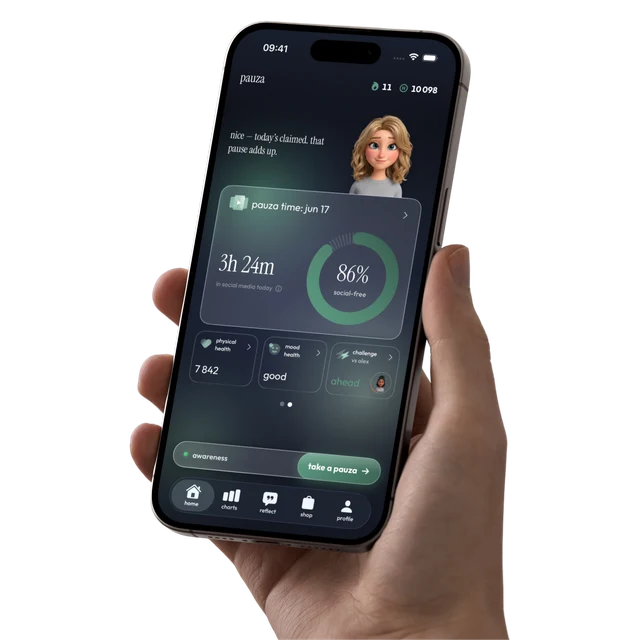
More free tools: screen time calculator · screen time statistics 2026