why rewards beat restriction for changing phone habits

The most common misconception about phone habits is that strict limits and blocked apps are the only way to reduce screen time. In reality, rewards can be more effective than restriction for building sustainable, healthy habits. This article looks at both sides, debunks common myths, and offers practical ways to shift your relationship with your iPhone.
When it comes to changing phone habits, using rewards—such as tracking progress, earning non-monetary tokens, or building streaks—can be more effective than pure restriction. Rewards create positive reinforcement, making it easier to sustain healthy screen time routines rather than relying only on willpower or app blocking.
key takeaways
- Rewards foster positive motivation and make habit change less stressful.
- Relying solely on restrictions or willpower often leads to frustration or relapse.
- Tracking and celebrating small wins (like streaks or earned tokens) encourages lasting behaviour change.
- Combining rewards with clear boundaries is usually more effective than restriction alone.
myth: more restrictions always mean better results
Many people believe that the stricter they are with blocking apps or setting screen time limits, the better their results will be. While restrictions can help in the short term, they often backfire by creating a sense of deprivation or leading to sneaky workarounds.
Research in habit formation suggests that positive reinforcement—rewarding yourself for good behaviour—builds habits that last. For example, tracking your time away from social media and earning in-app tokens (as you do with apps like Pauza) can be more motivating than simply hitting a wall of restrictions.
Instead of relying only on blocking, try combining gentle boundaries with a system that rewards time spent offline. This dual approach helps you build self-awareness and motivation, not just self-control.
- Restrictions can increase stress or prompt workaround behaviour.
- Rewards build positive associations with healthier phone use.
- A balanced approach is often the most sustainable.
myth: willpower is all you need to use your phone less
It's common to think that cutting down on screen time is simply a matter of self-control. But studies show that willpower alone is fragile, especially when habits are tied to instant rewards like social media notifications.
Building in external motivators, such as visible progress or friendly competition, makes it easier to stick to new routines. Apps that offer streaks, progress charts, or the chance to challenge a friend tap into this principle.
If you keep struggling with willpower, try setting up automatic rewards for time spent away from your phone—every minute counts toward visible progress.

myth: tracking screen time is pointless without strict limits
Some believe that simply tracking screen time is useless unless paired with hard limits or app blocking. In fact, self-monitoring is a powerful behaviour change tool. Seeing your real patterns often leads to natural adjustments, even before you set any limits.
For instance, comparing your usage to the average screen time—such as the 2 hours and 21 minutes per day that the average internet user spends on social media (source: DataReportal, Digital 2025)—can provide important perspective. A screen time calculator makes those hours concrete.
Try reviewing your daily iPhone screen time report (Settings > Screen Time > See All Activity) and set a simple goal, like reducing your social media time by 10% next week. Celebrate small wins, not just big cutbacks.
- Awareness often leads to natural habit changes.
- Realistic goals are more sustainable than drastic limits.
- Use tracking to set and celebrate achievable progress.
myth: only cash or big prizes motivate habit change
There's a widespread belief that you need major incentives—like money or expensive rewards—to change your phone habits. Yet research in behavioural psychology shows that small, non-monetary rewards (like progress streaks, badges, or friendly bets) can be just as effective.
Apps that let you earn in-app tokens or challenge friends to a screen time competition tap into our natural enjoyment of progress and playful rivalry. The act of earning and tracking—even without a material prize—creates a powerful feedback loop.
Pauza, for example, turns every minute you spend off your phone into tokens and streaks, and lets you set up friendly competitions. The focus is on positive reinforcement, not financial gain.
- Non-cash rewards are effective motivators.
- Progress tracking and social features boost engagement.
- Focus on consistent, small wins over time.
myth: restriction is safer for privacy than rewards
Some users worry that apps using rewards or tracking must collect and share more data than pure restriction-based tools. In reality, privacy depends on the app’s design, not the method of habit change.
For example, some reward-based apps like Pauza keep raw usage data on your device and don’t require sharing it with outside servers. Always check an app’s privacy policy and choose those that store your data locally and offer clear controls.
On iPhone, you can review which apps have access to your data by going to Settings > Privacy & Security > App Privacy Report. Use these settings to monitor and limit data sharing.
myth: rewards work for kids but not for adults
Another myth is that rewards and gamified systems are only effective for children and teens, not for adults. In practice, adults respond just as strongly to positive reinforcement, especially when it’s tied to meaningful goals or social accountability.
Features like friendly competitions, progress tracking, and streaks work for all ages. Even busy adults benefit from seeing visual progress and having small milestones to celebrate.
To make it work for you, set up a personal challenge or invite a friend to join you in reducing screen time. Friendly accountability is a powerful motivator at any age.
by the numbers
- The average internet user spends 2 hours and 21 minutes on social media every day.— DataReportal, Digital 2025
Ready to build healthier phone habits? Try Pauza for free on your iPhone and see how rewarding positive change can be.
Get Pauza on iPhone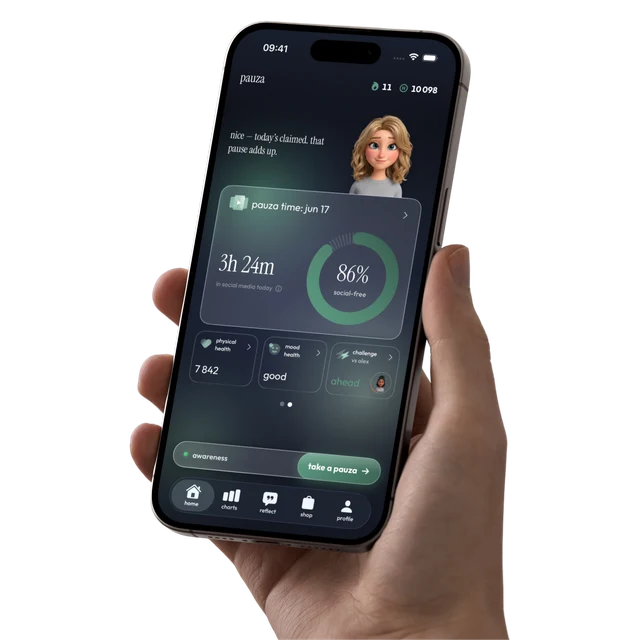
frequently asked questions
How do I set up rewards for phone-free time on iPhone?
Use apps that track your time away from the screen and offer non-monetary rewards like tokens, streaks, or challenges. You can also set personal goals and celebrate each milestone, even with a simple chart or journal.
Are rewards more effective than blocking apps?
Rewards and positive reinforcement help build long-term habits and avoid the frustration of strict app blocking. For many people, combining both—gentle limits plus rewards—brings the best results.
Will tracking my screen time really help me change?
Yes. Self-monitoring increases awareness and often leads to natural reductions. Regularly reviewing your daily and weekly iPhone reports helps you spot patterns and set realistic targets.
Is using rewards for screen time a form of gambling?
No. In well-designed apps, tokens and friendly bets have no cash value and cannot be withdrawn. The focus is on fun, friendly accountability, and positive habit building, not monetary gain.
How can I protect my privacy when using habit-tracking apps?
Choose apps that keep your data on your device and offer clear privacy controls. On iPhone, review app permissions often in Settings > Privacy & Security > App Privacy Report.
Does this approach work for adults as well as kids?
Absolutely. Adults benefit from rewards, streaks, and social accountability just like kids. The key is choosing motivators that feel meaningful and sustainable for you.
free tools
- screen time calculator — see what your daily hours add up to over a year
- average screen time statistics — how your usage compares to the latest data
- phone habit test — a 2-minute check of your phone habits