how much screen time is too much?

The average internet user spends 2 hours and 21 minutes on social media every day, according to DataReportal’s Digital 2025 report. This number is striking—and it raises a real question: how much screen time is too much? Understanding the data behind our habits is the first step to making thoughtful changes.
There is no universal limit for how much screen time is too much, but experts suggest monitoring for negative impacts like sleep disruption or reduced real-life activities. Consider keeping recreational screen time under 2 hours per day and regularly reviewing your digital habits to maintain balance.
key takeaways
- Most people spend over 6 hours online each day, with social media taking up a significant share.
- There’s no single 'safe' limit, but signs of overuse include sleep issues and neglecting offline interests.
- Teens and tweens are especially affected, averaging up to 9 hours per day on entertainment media.
- Simple settings and mindful habits can help reduce unwanted screen time.
the headline numbers: how much time are we really spending?
Understanding how much screen time is too much starts with seeing the scale of our habits. According to DataReportal’s Digital 2025 report, people spend an average of 6 hours and 38 minutes online across all devices each day. Social media alone accounts for 2 hours and 21 minutes of this total.
For younger people, the numbers are even higher. Common Sense Media found that U.S. teens use an average of about 9 hours of entertainment media per day, not counting schoolwork. Tweens aged 8–12 average about 5 hours and 33 minutes.
These statistics suggest that heavy screen use is now the norm, but the effects depend on the type of activity and personal circumstances. Apps like Pauza have emerged to help users notice and manage their screen time.
- Average daily time online (all devices): 6 hours, 38 minutes (DataReportal, 2025)
- Average daily social media use: 2 hours, 21 minutes (DataReportal, 2025)
- Teens’ average entertainment media use: 9 hours/day (Common Sense Media)
- Tweens’ average entertainment media use: 5 hours, 33 minutes/day (Common Sense Media)
what’s driving our screen time?
Multiple factors keep us glued to screens. Social media platforms are designed to capture attention, and smartphones make access effortless. The pandemic accelerated digital reliance, with more work, school, and socializing moving online.
Notifications and endless feeds can make it hard to step away. Many people find themselves scrolling without purpose, especially when stressed or bored.
The typical social media user now actively uses 6.5 different platforms monthly, showing just how fragmented—and constant—our digital habits can be.
- Social media and entertainment apps encourage repeat use
- Easy, constant access via smartphones
- Rising use of multiple platforms (6.5 per user/month—DataReportal, 2025)

who is most affected by high screen time?
Screen time affects everyone, but some groups are more exposed than others. Teens and tweens have especially high averages, with 95% of U.S. teens now having access to a smartphone (Pew Research Center, 2024).
Nearly half (46%) of U.S. teens say they are online almost constantly, double the share from a decade ago. This trend raises concerns about social development, sleep, and mental health.
Adults are not immune; work and social obligations have pushed many to spend more time online than they realize.
what does too much screen time look like day-to-day?
Too much screen time isn’t just a number—it’s the effects you notice in yourself or your family. Warning signs include trouble sleeping, headaches, eye strain, and losing interest in offline activities.
If scrolling replaces face-to-face time or physical movement, that’s a key sign to step back. For children and teens, excessive screen use can impact mood, focus, and school performance.
The right amount of screen time varies per person, but regularly checking in with your habits (using built-in iPhone Screen Time, for example) helps spot patterns before they become problems.
practical steps to take control of your screen time
Reducing unwanted screen time doesn’t have to be drastic. Start by tracking your usage honestly—on iPhone, go to Settings > Screen Time to see daily and weekly reports.
Set limits for specific apps or categories using Downtime or App Limits (Settings > Screen Time > App Limits). For families, enable Share Across Devices for a full view.
Try ‘phone-free’ zones or times, like meals or the hour before bed. Small challenges—like betting a friend on who can scroll less—can add motivation. Apps like Pauza reward you for staying off your phone, making mindful breaks a bit more fun.
Review your habits regularly, and adjust as needed. If you notice signs of overuse, experiment with removing one app or turning off notifications for a week to see how you feel.
- Check your daily and weekly screen time reports (Settings > Screen Time)
- Set App Limits and schedule Downtime on iPhone
- Create phone-free spaces (dinner table, bedroom)
- Turn off non-essential notifications
- Try apps that encourage time away from your phone
finding your own healthy balance
There’s no universal rule for how much screen time is too much—what matters is finding a balance that supports your wellbeing and priorities. Some people may be comfortable with more time online due to work or hobbies, while others need stricter boundaries.
If you’re looking for positive reinforcement, Pauza for iPhone offers a way to earn in-app tokens for time spent away from your device, track streaks, and even compete with friends for the lowest screen time. These tools can help you stay mindful and accountable.
Ultimately, keep tuning into how you feel and adjust your digital habits as your needs change.
by the numbers
- The average internet user spends 2 hours and 21 minutes on social media every day.— DataReportal, Digital 2025
- People spend an average of 6 hours and 38 minutes online across all devices each day.— DataReportal, Digital 2025
- U.S. teens use an average of about 9 hours of entertainment media per day, not counting schoolwork.— Common Sense Media
- Tweens aged 8–12 average about 5 hours and 33 minutes of screen media per day.— Common Sense Media
- The typical social media user actively uses 6.5 different platforms each month.— DataReportal, Digital 2025
- 95% of U.S. teens have access to a smartphone.— Pew Research Center, 2024
- Nearly half of U.S. teens (46%) say they are online almost constantly — roughly double the share a decade ago.— Pew Research Center, 2024
Ready to see how your habits stack up? Download Pauza for iPhone and discover a calmer, more balanced way to use your screen time.
Get Pauza on iPhone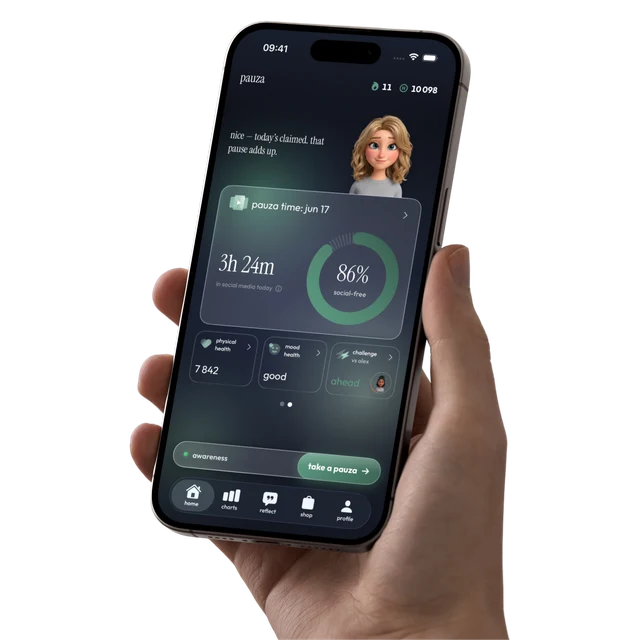
frequently asked questions
Is there a recommended daily screen time limit for adults?
There isn’t a strict guideline for adults, but many experts suggest keeping recreational screen time under 2 hours per day when possible. Monitor for negative impacts like sleep disruption or lost interest in offline activities.
How does screen time affect sleep?
Screen use, especially before bed, can interfere with sleep quality by disrupting your circadian rhythm and making it harder to fall asleep. Blue light from screens is a common culprit.
What are signs I’m spending too much time on screens?
Common signs include eye strain, headaches, trouble sleeping, irritability, and neglect of offline hobbies or relationships. If you notice these, it may be time to cut back.
How can I reduce my screen time on iPhone?
Use the built-in Screen Time feature in Settings to set daily limits, schedule Downtime, and review app usage. Turning off non-essential notifications and creating phone-free zones can also help.
Does all screen time count equally?
Not all screen time is the same. Time spent on work, learning, or creative projects may have different effects than passive scrolling or entertainment. Balance is key.
Can apps actually help me use my phone less?
Yes, some apps use gentle rewards, streaks, or friendly competition to motivate mindful breaks. They work best when combined with your own goals and awareness.
free tools
- screen time calculator — see what your daily hours add up to over a year
- average screen time statistics — how your usage compares to the latest data
- phone habit test — a 2-minute check of your phone habits