digital wellbeing, explained simply

Digital wellbeing means having a balanced, healthy relationship with technology so that it supports your life instead of distracting or overwhelming you. It’s not about total avoidance, but about using digital tools thoughtfully. There’s no one-size-fits-all approach—what works for one person may not work for another.
Digital wellbeing is the practice of managing your technology use so it enhances, rather than disrupts, your mental, physical, and social health. It involves making intentional choices about screen time, online habits, and device settings to support your personal wellbeing and productivity.
key takeaways
- Digital wellbeing is about balance, not total avoidance of technology.
- It includes practical steps like setting boundaries, monitoring screen time, and using mindful tech habits.
- Evidence suggests that conscious digital habits can reduce stress and distraction, but results vary.
- Tools like iPhone’s Screen Time and apps such as Pauza can help you build awareness and healthier routines.
what is digital wellbeing?
Digital wellbeing is the state of health and balance you experience in your relationship with digital technology. It covers your mental, emotional, and social health as influenced by your screen time, online activity, and device habits.
Rather than aiming for perfection or complete digital detox, the goal is to use technology in ways that support your values, priorities, and daily life. This can look different for everyone—some may focus on reducing social media use, while others prioritize work-life boundaries.
Pauza is one example of an app designed to support digital wellbeing by encouraging time away from your iPhone, but the core idea is much broader and applies to all digital habits.
how digital wellbeing actually works
Digital wellbeing works by increasing your awareness of how and when you use technology, then supporting you to make intentional choices. This often starts with tracking your screen time or noticing when certain apps leave you feeling drained or distracted.
Most smartphones, including iPhones, offer built-in tools for this. For example, you can open Settings > Screen Time to see daily and weekly reports, set app limits, and schedule downtime. These features help you spot patterns and adjust your habits accordingly.
Some people also use third-party apps or device modes to reinforce boundaries, or set up routines that combine tech-free time with other activities.
- Review your daily screen time reports to identify trends.
- Set time limits for specific apps (e.g., 30 minutes for social media).
- Schedule 'downtime' where only essential apps are enabled.
- Use focus modes to minimize notifications during work or rest.

what the evidence does—and doesn’t—support
Research into digital wellbeing is ongoing, and while some findings are clear, many outcomes depend on individual circumstances. Excessive screen time has been linked to increased stress, distraction, and sleep issues for some people, especially when it disrupts in-person relationships or daily routines.
For context, the average internet user spends 2 hours and 21 minutes on social media every day (DataReportal, Digital 2025). That’s a significant portion of waking hours, but not everyone experiences negative effects to the same degree.
There’s solid evidence that intentional breaks from screens, especially before bed, can improve sleep and focus. However, there isn’t a universally agreed-upon 'safe' amount of screen time, and not all digital engagement is harmful—some online interactions support wellbeing and social connection.
- Excessive, unintentional screen time can impact sleep and stress.
- Deliberate tech use—like connecting with friends—can support wellbeing.
- The right balance varies by person, age, and context.
how to try digital wellbeing in practice
Building healthier digital habits is about experimentation and self-awareness. Start by observing your current patterns for a few days. On iPhone, go to Settings > Screen Time to check your daily and weekly usage data. Notice which apps or times of day leave you feeling distracted or depleted.
Set one or two realistic goals—like reducing evening social media use, or taking a 30-minute phone-free walk every day. You can set app limits (Settings > Screen Time > App Limits) or schedule downtime periods (Settings > Screen Time > Downtime) when only essential apps are accessible.
Apps like Pauza add a social and motivational layer by rewarding off-screen time with tokens, encouraging friendly challenges, and helping you build streaks. These features can make the process feel more engaging, but the most important step is finding habits that genuinely fit your life.
- Check your current screen time and identify patterns.
- Choose one habit or boundary to try for a week.
- Use built-in iPhone settings or apps like Pauza to support your goal.
- Reflect on how these changes affect your focus, mood, or sleep.
common misunderstandings about digital wellbeing
One common misconception is that digital wellbeing means avoiding screens altogether. In reality, it’s about mindful, intentional use—technology is a vital part of modern life, and can support wellbeing when used thoughtfully.
Another misunderstanding is that all screen time is equally harmful. The content, context, and your emotional response matter as much as the total hours spent. For example, using video calls to keep up with family often feels very different from endless scrolling.
It’s also easy to assume that a single app or setting will 'fix' your relationship with technology, but lasting change is usually gradual and personal.
tools and next steps for your digital wellbeing
Many resources can help you build more mindful digital habits. iPhone’s Screen Time features provide detailed reports, app limits, and downtime scheduling. Explore Settings > Screen Time to customize these features for your needs.
Apps like Pauza make it easier to stay motivated—by turning off-screen time into tokens, tracking streaks, and allowing friendly competitions to reduce screen time with others. Importantly, apps like this keep your usage data on your device for privacy.
You might also try simple techniques like charging your phone outside the bedroom, setting notification preferences for only essential apps, or carving out regular phone-free time each day. The key is to try small changes, notice what works for you, and adjust as needed.
by the numbers
- The average internet user spends 2 hours and 21 minutes on social media every day.— DataReportal, Digital 2025
Ready to experiment with healthier screen habits? Try Pauza on your iPhone and see how rewarding mindful breaks from your phone can feel.
Get Pauza on iPhone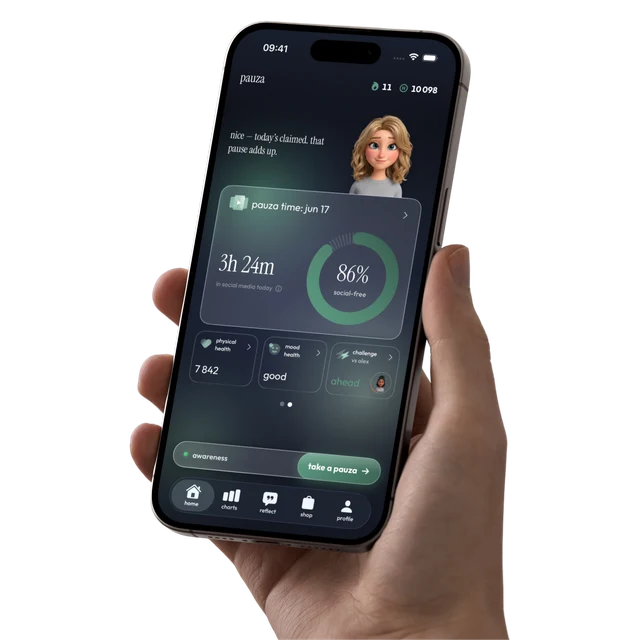
frequently asked questions
Is digital wellbeing just about reducing screen time?
No, it’s about finding a healthy balance that works for you. This can include setting boundaries, choosing intentional activities, and using technology in ways that support your overall wellbeing.
What’s a realistic first step to improve digital wellbeing?
Start by checking your daily screen time on your device, and pick one small change—such as setting a limit on a single app or creating a phone-free bedtime routine.
Are all types of screen time equally harmful?
No. The impact depends on what you’re doing, how you feel during and after, and whether it disrupts other important activities like sleep, work, or social time.
How can I involve friends or family in digital wellbeing?
You can set shared challenges, agree on phone-free times together, or use apps that allow friendly competitions to reduce screen time.
Do I need special apps to practice digital wellbeing?
Not necessarily—built-in settings on your phone are a great starting point. However, dedicated apps like Pauza can add motivation and social support.
Is it possible to have good digital wellbeing without cutting out social media?
Yes. Mindful, intentional use of social media—such as setting limits or curating your feed—can support positive digital wellbeing, rather than complete avoidance.
free tools
- screen time calculator — see what your daily hours add up to over a year
- average screen time statistics — how your usage compares to the latest data
- phone habit test — a 2-minute check of your phone habits