why is my screen time so high? the real reasons (and fixes)

People spend an average of 6 hours and 38 minutes online across all devices each day (source: DataReportal, Digital 2025). This number is a wake-up call, reflecting how digital habits shape our routines — and why many of us ask, "why is my screen time so high?" Understanding the real reasons behind it is the first step to making mindful choices.
Your screen time is often high because everyday life, work, and socialising now revolve around digital devices. Social media, entertainment, notifications, and habits all drive frequent use. Practical fixes include adjusting notifications, setting app limits, and consciously scheduling device-free moments.
key takeaways
- People spend an average of 6 hours and 38 minutes online each day across devices.
- Social media and entertainment apps are major contributors to high screen time.
- Teens and young adults are among the most affected groups.
- Simple changes, like notification controls and usage tracking, can help reduce screen time.
the headline numbers: how much time do we really spend on screens?
The numbers behind our daily device use are striking. According to DataReportal, people spend an average of 6 hours and 38 minutes online across all devices each day. Social media alone accounts for 2 hours and 21 minutes of that time.
These figures include work, communication, entertainment, and passive browsing — making it easy to underestimate our own habits. For many, the total adds up quietly until a weekly report or a screen time calculator makes those hours concrete.
Understanding your personal screen time is the first step to identifying patterns and deciding which changes matter most.
- 6 hours and 38 minutes: average daily online time (DataReportal, Digital 2025)
- 2 hours and 21 minutes: average daily social media use (DataReportal, Digital 2025)
what's driving high screen time?
Several habits and technologies combine to keep us glued to our screens. Social media platforms are designed for engagement, with endless feeds and frequent notifications. Entertainment apps, news, and messaging also compete for attention.
Many people use multiple devices throughout the day — phones, tablets, laptops — with usage often overlapping. The typical social media user actively uses 6.5 different platforms each month (DataReportal, Digital 2025), which means more reasons to check in.
Apps like Pauza offer a different approach, rewarding intentional time away from your phone rather than just blocking access. Recognising how and why you use devices helps you decide what to change.
- Multiple platforms and apps increase check-ins
- Notifications and algorithm-driven feeds drive engagement
- Device overlap means screen time can add up quickly

who is most affected by high screen time?
Young people are especially impacted. Nearly half of U.S. teens (46%) say they are online almost constantly, according to Pew Research Center (2024). Teens use an average of about 9 hours of entertainment media per day, not counting schoolwork (Common Sense Media).
This is partly because 95% of U.S. teens have access to a smartphone, making the internet available anywhere, anytime. But adults are not immune: remote work, social connections, and streaming all contribute.
If you find your screen time higher than the average screen time, you're not alone — but it's worth noticing how age, occupation, and personal habits shape your experience.
- 46% of U.S. teens are online almost constantly (Pew Research Center, 2024)
- 9 hours: average daily entertainment media use for U.S. teens (Common Sense Media)
- 95% of U.S. teens have access to a smartphone (Pew Research Center, 2024)
what does all this screen time mean day-to-day?
High screen time affects more than just how we spend our days. It can interrupt focus, sleep, and even relationships. Notifications and quick-checks make it hard to be present, whether at work, with family, or during downtime.
Research doesn't suggest that all screen time is harmful, but mindless or fragmented use can leave us feeling distracted or tired. Noticing when screen use feels intentional versus automatic is key.
Apps that track usage, like Apple's Screen Time or third-party options, can help you see these patterns — and notice which parts of your day might benefit from a change.
simple, concrete fixes for high screen time
Reducing screen time doesn't require a total digital detox. Instead, small, specific actions can make a difference:
1. Set app limits: On iPhone, go to Settings > Screen Time > App Limits, and set daily limits for social or entertainment apps. Start with a realistic cap.
2. Use Focus Modes: Settings > Focus lets you create modes for work, sleep, or personal time that pause notifications from chosen apps.
3. Turn off non-essential notifications: In Settings > Notifications, disable alerts for apps that don't need your immediate attention.
4. Schedule device-free windows: Block out 30–60 minutes for meals, reading, or walks without your phone nearby.
5. Try accountability or rewards: Apps like Pauza let you earn tokens for time spent off your phone, track streaks, or bet friends on who can scroll less — all in a privacy-first way.
The goal isn't zero screen time, but more intentional use. Even a small reduction can make your day feel more spacious and focused.
- Set app-specific limits in iPhone Screen Time.
- Create custom Focus Modes for work or downtime.
- Disable unnecessary notifications.
- Schedule daily device-free periods.
- Use accountability tools or rewards for off-screen time.
by the numbers
- People spend an average of 6 hours and 38 minutes online across all devices each day.— DataReportal, Digital 2025
- The average internet user spends 2 hours and 21 minutes on social media every day.— DataReportal, Digital 2025
- The typical social media user actively uses 6.5 different platforms each month.— DataReportal, Digital 2025
- Nearly half of U.S. teens (46%) say they are online almost constantly — roughly double the share a decade ago.— Pew Research Center, 2024
- U.S. teens use an average of about 9 hours of entertainment media per day, not counting schoolwork.— Common Sense Media
- 95% of U.S. teens have access to a smartphone.— Pew Research Center, 2024
Ready to try a more mindful approach? Try Pauza for iPhone to turn time away from your phone into a positive habit — no pressure, just progress.
Get Pauza on iPhone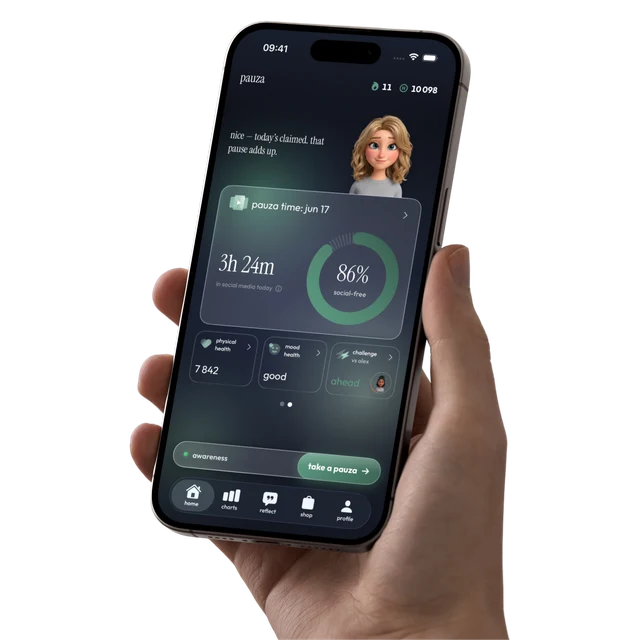
frequently asked questions
How do I check my screen time on iPhone?
Go to Settings > Screen Time to view a breakdown of your daily and weekly app usage. You can see time spent per app and set limits directly from this menu.
What is considered a healthy amount of screen time?
There's no universal number. It depends on your needs, age, and lifestyle. Focus on how screen time affects your sleep, focus, and wellbeing, rather than a strict hour count.
Can reducing screen time improve my wellbeing?
Many people find that cutting back on mindless screen use improves focus and mood. The key is intentional use: prioritise what feels meaningful and minimise habits that drain your attention.
Are screen time tracking apps safe for privacy?
Most built-in tools and reputable third-party apps prioritise privacy by keeping your raw usage data on your device. Always review app privacy policies to be sure.
What should I do if my job requires a lot of screen time?
Focus on reducing non-essential use during breaks and after work. Use features like Focus Mode or scheduled downtime to create boundaries when possible.
Why do I keep picking up my phone even when I don’t need to?
Habitual checking is common, driven by notifications and boredom. Try turning off non-essential notifications and keeping your phone out of reach during focused tasks or downtime.
free tools
- screen time calculator — see what your daily hours add up to over a year
- average screen time statistics — how your usage compares to the latest data
- phone habit test — a 2-minute check of your phone habits