phone addiction test: 10 questions to ask yourself

A phone addiction test is a self-assessment tool to help you reflect on your phone use and its effects on your daily life. While not a formal diagnosis, it can highlight patterns that may be worth changing. It’s normal to use your phone often, but noticing when it interferes with your wellbeing is key.
A phone addiction test is a set of questions designed to help you evaluate whether your smartphone use is interfering with your life, relationships, or wellbeing. By honestly answering these questions, you can gain insight into your habits and decide if you might benefit from making changes.
key takeaways
- A phone addiction test highlights patterns, not diagnoses.
- Self-reflection helps spot when phone use is becoming unhealthy.
- Science links heavy use to wellbeing changes, but context matters.
- Tools like iPhone Screen Time and apps can track real usage.
what is a phone addiction test?
A phone addiction test is a series of questions that prompt you to reflect on how, when, and why you use your smartphone. These questions often cover topics like frequency of use, emotional triggers, and impact on your sleep, work, or relationships.
It’s not a medical tool but rather a starting point for self-reflection. You won’t get a diagnosis, but you might notice habits that don’t feel healthy or sustainable.
With nearly half of U.S. teens saying they are online almost constantly (Pew Research Center, 2024), it’s become common to wonder if our own usage is veering into problematic territory. Apps like Pauza can help by making you more aware of your habits.
- Phone addiction tests are self-assessment tools.
- They prompt honest reflection on your digital habits.
how does a phone addiction test work?
Phone addiction tests use straightforward questions about your behavior and feelings toward your device. They aren’t scored like exams—what matters is your honest response.
Typical questions ask about how much time you spend on your phone, if you feel restless without it, or if you’re using it to escape difficult feelings. The goal is to spot patterns that might signal overuse.
To make your usage more concrete, try using the iPhone’s Screen Time feature (Settings > Screen Time) or a screen time calculator. These tools show exactly how much time you spend on different apps and activities.
- Answer each question honestly.
- Notice which questions trigger discomfort or surprise.
- Review your usage data for objective context.

what does the science say about phone addiction?
Research shows that many people spend significant time on their phones, but not all heavy use is harmful. For example, U.S. teens use an average of about 9 hours of entertainment media per day—not counting schoolwork (Common Sense Media).
Some studies link excessive screen time to disrupted sleep, lower mood, or stress, especially if it replaces physical activity or real-world connection. However, experts caution that context matters: using your phone for creative projects or to stay in touch may be very different from mindless scrolling.
There’s no universal threshold for ‘addiction.’ What matters most is whether your phone use feels out of your control or gets in the way of things that matter to you.
- High screen time is common, especially among teens.
- Negative effects depend on how and why you use your phone.
- No official medical diagnosis for ‘phone addiction’ exists yet.
how to try a phone addiction test for yourself
Set aside a few minutes to quietly answer these 10 questions. Be honest—there are no right or wrong answers. Use your phone’s Screen Time data to inform your responses where possible.
10 questions to ask yourself:
If several of your answers make you uncomfortable, that’s a sign to consider changing your habits. Tracking your screen time with an app like Pauza can help you build awareness and set realistic goals.
- Do you check your phone first thing in the morning or last thing at night?
- Do you feel anxious or restless if you can’t access your phone?
- Have you tried (and struggled) to cut back on screen time?
- Do you lose track of time while scrolling or watching videos?
- Does your phone use interfere with sleep, work, or relationships?
- Do you use your phone to avoid boredom or difficult feelings?
- Have friends or family commented on your phone habits?
- Do you reach for your phone during meals or conversations?
- Have you ever hidden or lied about your phone use?
- Do you feel relief or satisfaction putting your phone away for a while?
common misunderstandings about phone addiction
Not everyone with high screen time is ‘addicted.’ Many people use their phones heavily for work, study, or creative projects, and that isn’t necessarily harmful.
It’s also common to underestimate how often you pick up your phone. Checking usage statistics or using a screen time calculator makes those hours concrete.
Setting limits or using apps doesn’t mean you’re ‘failing’—it’s just about building a healthier relationship with your device.
tools and next steps for healthier phone use
If your answers suggest your phone use feels out of control, try these steps:
On iPhone, go to Settings > Screen Time to see your daily and weekly usage. Set App Limits for social media or games. Use Downtime to schedule breaks from your device.
Apps like Pauza make it easier to notice patterns and encourage time away from your phone. Pauza rewards you with in-app tokens for every minute offline, lets you build streaks, and even bet friends on who can scroll less—without using real money.
Consider sharing your goals with a friend or family member for support. Review your progress weekly and adjust as needed.
- Review your Screen Time settings on your iPhone.
- Try tools like Pauza for gentle accountability.
- Set specific, achievable goals (e.g., no phone at meals).
- Check in with yourself regularly about your habits.
by the numbers
- Nearly half of U.S. teens (46%) say they are online almost constantly — roughly double the share a decade ago.— Pew Research Center, 2024
- U.S. teens use an average of about 9 hours of entertainment media per day, not counting schoolwork.— Common Sense Media
Ready to get a clearer picture of your phone habits? Try Pauza on your iPhone and see how small changes can make a difference.
Get Pauza on iPhone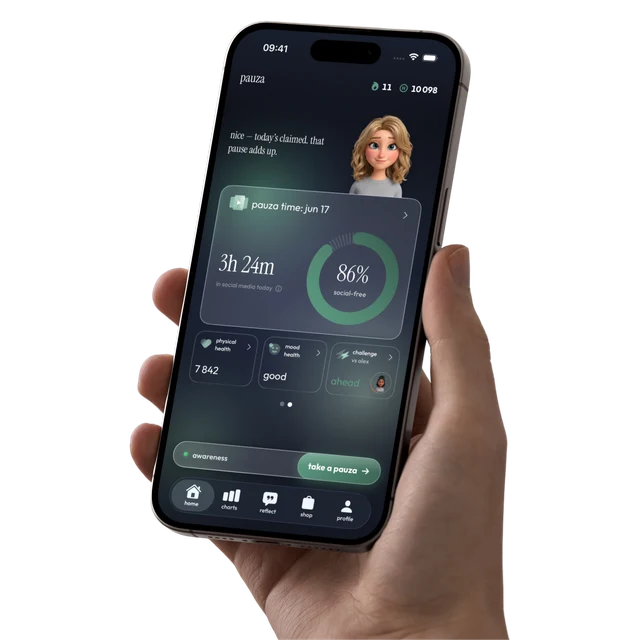
frequently asked questions
Is phone addiction a real medical condition?
Phone addiction isn’t officially recognized as a medical diagnosis. However, many people experience problematic use, and experts agree that it can impact wellbeing if it gets in the way of daily life.
How much screen time is too much?
There’s no single number that fits everyone. What matters is whether your phone use causes problems for your sleep, relationships, or responsibilities. Use your own needs and values as a guide.
Can a phone addiction test tell me if I need help?
These tests are for self-reflection, not diagnosis. If your answers suggest distress or loss of control, consider talking to a professional or making changes to your routine.
What’s the average screen time for most people?
The average internet user spends 2 hours and 21 minutes on social media daily, and people spend about 6 hours and 38 minutes online each day (DataReportal, Digital 2025).
How can I reduce my phone use without deleting apps?
Try setting App Limits, scheduling Downtime, or using apps that reward you for time spent offline. Small changes, like putting your phone in another room during meals, can make a big difference.
Are there free tools to help track my screen time?
Yes—iPhone includes Screen Time tools for free. Apps like Pauza also offer free features to help you build awareness and take breaks.
free tools
- screen time calculator — see what your daily hours add up to over a year
- average screen time statistics — how your usage compares to the latest data
- phone habit test — a 2-minute check of your phone habits