9 signs of phone addiction (and what to do about each)

Signs of phone addiction often show up as compulsive checking, losing track of time, or struggling to put your phone down. If you see these patterns in yourself, you’re not alone—and there are clear steps you can take. This guide breaks down nine real signs of phone addiction and offers honest, actionable solutions for each one.
Signs of phone addiction include compulsively checking your device, losing track of time while scrolling, feeling anxious without your phone, using it late at night, neglecting face-to-face interactions, and letting phone use interfere with responsibilities or hobbies. These patterns suggest your phone use may be negatively impacting daily life.
key takeaways
- Recognizing specific behaviors is the first step to addressing phone overuse.
- Simple iPhone settings can reduce unwanted notifications and interruptions.
- Building new routines and using supportive tools like Pauza can help reclaim your attention.
- Practical changes work best when paired with self-awareness and gradual habit shifts.
constantly checking without reason
One clear sign of phone addiction is reaching for your device even when nothing urgent is happening. If you find yourself unlocking your phone out of habit, just to scroll or check for notifications, it may be a sign of compulsion rather than need.
This kind of automatic checking breaks focus and can leave you feeling more distracted throughout the day. According to DataReportal, the average internet user spends 2 hours and 21 minutes on social media daily, suggesting that frequent, often unconscious checks add up over time.
To address this, try setting intentional 'phone-free' periods. On iPhone, enable Focus mode (Settings > Focus) during work or study hours. You can also move distracting apps off your home screen, making them less tempting to open instinctively. Using an app like Pauza can help you notice these habits and reward moments when you choose to stay present.
- Identify your main trigger moments (e.g., boredom, waiting in line).
- Set a Focus mode for those times each day.
- Move social apps to a folder away from your home screen.
- Track your check-ins with a digital wellbeing app.
losing track of time while scrolling
Another common sign of phone addiction is spending much longer on your phone than you intended. You might start with a quick check and end up scrolling for an hour without realizing it.
This time blindness is especially common with endless feeds and notification loops. Setting clear time limits can help you stay aware. On iPhone, you can use Screen Time (Settings > Screen Time > App Limits) to set daily app limits for social media or entertainment.
If you often find yourself ignoring these limits, try putting your phone in another room during certain activities. This physical separation—paired with timed app locks—can make it easier to step away.

feeling anxious or restless without your phone
If you notice irritability, anxiety, or discomfort when you can't use your phone—even for a short while—it may be a sign of dependency. This feeling is sometimes called 'nomophobia,' or the fear of being without your mobile device.
To manage this, try building up your comfort with short, intentional breaks. Start small: leave your phone in another room for 10 minutes while you do another activity. Gradually increase that time as you feel more at ease.
If you need extra support, let family or friends know you're working on this and ask them to join you in a short phone-free challenge. Communal support or even a friendly bet (as Pauza offers) can make the experience less daunting.
- Start with 10-minute phone-free intervals.
- Tell someone about your goal for accountability.
- Reward yourself for each successful break.
- Use gentle reminders (like sticky notes) around your space.
phone use interfering with sleep
Using your phone late at night is a well-documented sign of problematic use. The blue light from screens can delay sleep and reduce its quality, especially if you find yourself scrolling in bed or checking notifications right before sleep.
To reduce nighttime phone use, set a 'Wind Down' period in iPhone's Focus settings (Settings > Focus > Sleep). Schedule Do Not Disturb to activate automatically an hour before bed. Place your phone outside the bedroom or across the room, so reaching for it is less convenient.
You can also try replacing your phone with a book or another calming bedtime routine. Even small changes—like dimming your screen or using Night Shift mode—can help signal to your brain that it’s time to wind down.
neglecting face-to-face time
If you find yourself prioritizing your phone over in-person interactions, it may be impacting your relationships. This sign can look like checking your phone during meals, conversations, or social gatherings.
To address this, designate 'device-free' times with others—such as keeping phones off the table during meals or setting a group agreement to stack phones during hangouts. Physical cues, like a phone basket, can help reinforce the habit.
Apps like Pauza offer friendly competitions or shared challenges to encourage everyone to stay off their phones together. Making it a group effort often makes it easier to stick to your intentions and enjoy quality time.
- Set device-free rules for meals and gatherings.
- Use a shared phone basket to keep devices out of reach.
- Try group challenges to stay accountable.
- Reflect together on how these changes feel.
ignoring responsibilities or hobbies
One of the most disruptive signs of phone addiction is letting phone use crowd out your work, chores, or favorite activities. If you’re skipping tasks or neglecting hobbies because it’s easier to scroll, it’s time to make a change.
Begin by making a list of activities that matter to you but have slipped. Block off specific times for these activities and use iPhone’s Downtime feature (Settings > Screen Time > Downtime) to limit app access during those periods.
If you need motivation, try setting a simple daily challenge—such as earning a streak in an app like Pauza by staying off your phone while you focus on something meaningful. Over time, small wins can help rebuild your attention for things you care about most.
by the numbers
- The average internet user spends 2 hours and 21 minutes on social media every day.— DataReportal, Digital 2025
If you’re looking for a gentle, rewarding way to spend less time on your phone, try Pauza on your iPhone. Small changes add up—your attention is worth protecting.
Get Pauza on iPhone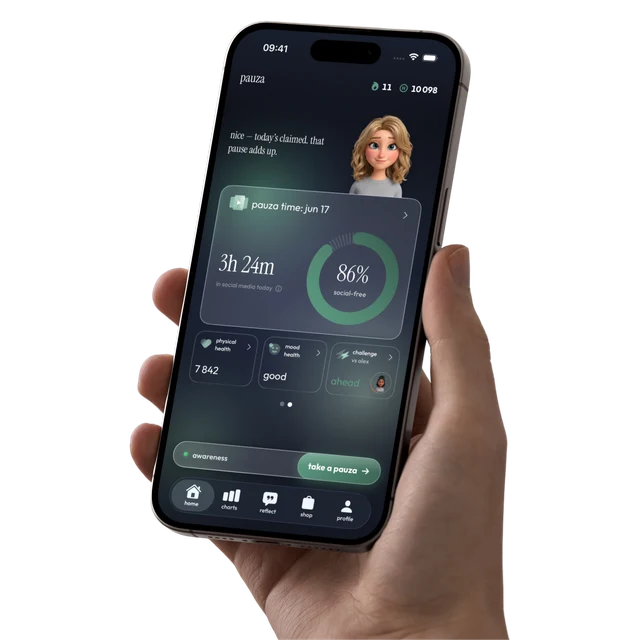
frequently asked questions
What are the most common signs of phone addiction?
Common signs include compulsive checking, losing track of time while using your phone, feeling anxious when you can’t access your device, and letting phone use interfere with sleep, relationships, or daily responsibilities.
How much phone use is considered too much?
There is no universal cutoff, but spending hours each day on your phone—especially in ways that disrupt your life or well-being—may signal a problem. Reflect on how phone use affects your goals and routines.
How can I track my phone usage on iPhone?
Go to Settings > Screen Time to see daily and weekly reports. You can also set app limits, Downtime, and use Focus modes to help manage when and how you use your device.
What is a simple first step to reduce phone addiction?
Try setting one phone-free period each day, even for just 10–15 minutes. Use this time for another activity you enjoy, and build up from there.
Can an app really help me reduce phone use?
It can, especially when it provides clear feedback and positive reinforcement. Apps like Pauza reward you for time spent off your device and can add a layer of accountability or motivation.
Is phone addiction the same as other addictions?
Phone overuse shares some patterns with behavioral addictions, like compulsive checking or loss of control, but it's not officially classified as an addiction in many medical guidelines. Still, if it disrupts your life, it’s worth addressing.
free tools
- screen time calculator — see what your daily hours add up to over a year
- average screen time statistics — how your usage compares to the latest data
- phone habit test — a 2-minute check of your phone habits