8 signs of brain rot (and how to tell it's happening to you)

Wondering if your mind is getting foggy from too much screen time? This list covers 8 distinct signs of brain rot, plus actionable ways to spot and address each one. If you’re concerned about your attention, memory, or daily habits, these tips can help you take control before things slip further.
Signs of brain rot include worsening concentration, frequent forgetfulness, mental exhaustion, and reduced motivation—often linked to excessive screen or social media use. To tell if it's happening to you, monitor your focus and memory, track your screen time, and notice any decline in real-life engagement or creativity.
key takeaways
- Difficulty focusing and frequent multitasking are early warning signs of brain rot.
- Forgetfulness and trouble recalling information can signal cognitive overload.
- Tracking your actual screen time helps make hidden habits visible and actionable.
- Restoring real-world interactions and regular breaks can protect your mental sharpness.
you lose focus easily, even on simple tasks
If you find yourself unable to concentrate on reading a single article or following a meeting without checking your phone, it’s a clear sign your attention span may have shrunk. Constant digital distractions train your brain to crave novelty and quick rewards.
Action: Use iPhone’s Focus mode (Settings > Focus) to limit notifications, and schedule short, uninterrupted work blocks. Apps like Pauza can help you visualize and reward time spent away from your phone, reinforcing longer stretches of focus.
- Set up a custom Focus mode for work or study.
- Leave your phone in another room for 30 minutes at a time.
you forget things you just read or heard
Forgetting appointments, losing your train of thought mid-sentence, or re-reading the same paragraph multiple times can mean your working memory is overloaded. Brain rot often shows up as a struggle to retain new information.
Action: Practice active recall. After reading or hearing something important, pause and try to summarize it aloud or jot down key points. This strengthens memory and helps break passive scrolling habits.
- After each new piece of information, repeat it back to yourself or write a summary.
- Keep a notepad handy to jot down key points from meetings or articles.

you feel mentally drained after scrolling
If your mind feels foggy or exhausted after just 20 minutes on social media, you’re not alone. Endless feeds and notifications can leave you overstimulated and tired, even if you haven’t done anything physically demanding.
Action: Set a daily app limit in iPhone Settings (Screen Time > App Limits) for social media. When you hit the cap, step outside for a 5-minute break or stretch—physical movement restores mental clarity.
your screen time creeps up without you noticing
Many people underestimate how much time they spend on their phones. According to DataReportal, the average internet user spends 2 hours and 21 minutes on social media every day. Subtle increases in daily usage can go unnoticed, slowly crowding out healthier habits.
Action: Check your iPhone’s Screen Time report weekly (Settings > Screen Time), or use a screen time calculator to get a clearer picture. Compare your usage to the average screen time and look for patterns—are there certain apps or times of day when you lose track most?
- Review your Screen Time stats every Sunday.
- Identify your top three most-used apps and set limits on each.
you multitask constantly but finish less
Juggling texts, emails, and social feeds at once may feel productive, but frequent context-switching slows your brain down. Chronic multitasking is a classic sign of brain rot, leading to more mistakes and half-finished tasks.
Action: Try the ‘single-tasking’ method: commit to one task at a time for 15-25 minutes. Turn off unnecessary notifications and set your phone to Do Not Disturb to resist the urge to check other apps.
you've lost interest in offline hobbies or socializing
Apathy toward activities you once enjoyed, or declining invitations to spend more time online, can signal that your digital life is crowding out real-world experiences. Social withdrawal is a subtle but important sign.
Action: Schedule at least one offline activity with a friend or family member each week—anything from a walk to a board game night. For extra motivation, consider using an app like Pauza, which lets you challenge a friend to see who can spend the least time scrolling.
your creativity or motivation has faded
If you struggle to come up with new ideas or start projects, brain rot could be to blame. Passive consumption of endless content can dull creative thinking and reduce your drive to make or do things yourself.
Action: Set aside 20 minutes daily for a creative pursuit—drawing, journaling, or even cooking something new. Keep your phone in another room during this time to help your mind wander productively.
your sleep suffers after late-night scrolling
Blue light and mental stimulation from screens can disrupt your body’s natural sleep rhythms. If you’re struggling to fall asleep or wake up tired after using your phone late at night, your brain may not be getting the rest it needs.
Action: Set a “wind down” schedule in iPhone’s Health app (Health > Sleep > Sleep Schedule) to remind you when to put your phone away. Aim for at least 30 minutes of screen-free time before bed—charge your device outside the bedroom if possible.
by the numbers
- The average internet user spends 2 hours and 21 minutes on social media every day.— DataReportal, Digital 2025
Ready to reclaim your focus? Try Pauza on your iPhone to make time offline rewarding and visible—no hype, just a calmer mind.
Get Pauza on iPhone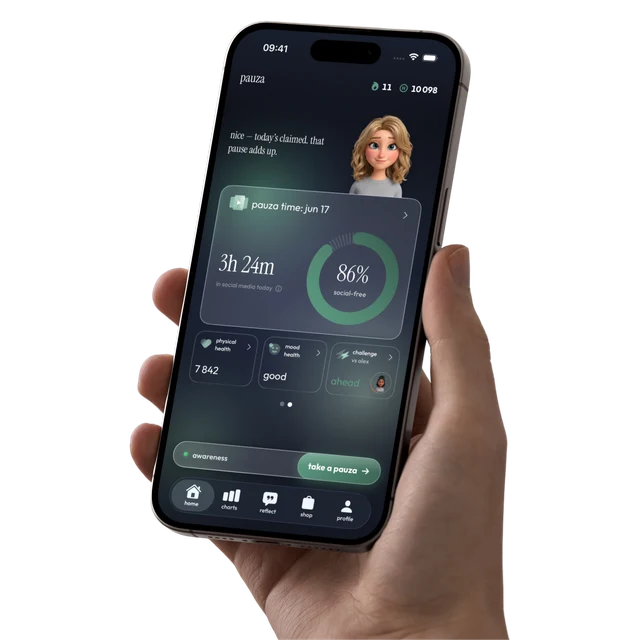
frequently asked questions
What is brain rot?
Brain rot is a casual term for the mental sluggishness, memory lapses, and loss of focus that can result from excessive digital consumption, especially social media and multitasking. It’s not a medical diagnosis, but a way to describe cognitive overload.
How can I check if I have signs of brain rot?
Monitor your ability to focus, recall information, and stay engaged in offline activities. If you notice increasing forgetfulness, declining motivation, or constant digital distraction, you may be experiencing early signs.
Does reducing screen time really help reverse brain rot?
Many people find that taking regular breaks from screens and re-engaging with offline activities improves their concentration and mood. Small, consistent changes—like screen-free evenings or device limits—can make a noticeable difference over time.
Are some apps better than others for managing screen time?
Apps that track your usage, reward time offline, or help you create healthy competition with friends can be effective. Pauza, for example, lets you earn tokens for time away from your phone and challenge others to lower your screen time together.
How much screen time is too much?
There’s no single threshold that works for everyone. However, if your screen use interferes with sleep, relationships, or productivity, it’s a sign to reassess. Comparing your usage to the average screen time can offer useful perspective.
free tools
- screen time calculator — see what your daily hours add up to over a year
- average screen time statistics — how your usage compares to the latest data
- phone habit test — a 2-minute check of your phone habits