the screen time widget: what ios shows on your home screen, and what it hides

The screen time widget on iOS puts your recent device usage front and center, showing daily and weekly app activity at a glance. But what you see isn't the full story. The widget highlights certain patterns and hides others, shaping how you understand your habits.
The screen time widget on iPhone displays a summary of your recent device usage, including total screen time and top-used apps, directly on your home screen. It updates throughout the day, but it may not show every detail—background activity and some categories are hidden by default.
key takeaways
- The screen time widget shows your daily and weekly app activity, but not all details are visible.
- Not all device use counts—background activity and some system features are excluded.
- You can customize or expand what you see, but understanding your habits may take extra steps.
- Comparing your numbers to the average screen time can offer useful context.
what is the screen time widget?
The screen time widget is a small, glanceable panel you can add to your iPhone or iPad home screen. It displays a summary of your screen usage, including total time spent on your device and your most-used apps for the day or week.
By default, the widget updates in real time. It makes it easier to stay aware of your usage without digging into the main Settings app. This feature is available on iOS 14 and later, but its data comes from the broader Screen Time system, which tracks app and device use in the background.
While the widget is helpful for quick checks, it doesn't reveal everything about your digital habits. For a more complete picture, you'll need to tap through to the full Screen Time dashboard—or consider third-party apps like Pauza that add extra layers of insight and motivation.
how does the screen time widget actually work?
The widget pulls data from iOS's Screen Time tracking, which logs when and how you use your device. Every time you unlock your phone, open an app, or browse the web, Screen Time records the duration and type of activity.
The widget shows either 'Today' or 'Week' views, depending on your settings. You can press and hold the widget to edit it, choosing between small, medium, or large sizes and different data summaries.
However, the widget only displays high-level data—usually your total usage and a list of your top-used apps. It hides background activity, system services, and detailed category breakdowns unless you open the full Screen Time report in Settings.
- Total screen time for the current day or week
- Top-used apps with usage times
- Change compared to previous periods
what the evidence says (and doesn't say) about tracking screen time
There is strong evidence that tracking device use can help some people become more aware of their habits. However, simply seeing your screen time number may not, by itself, lead to lasting behavior change.
Research shows that Americans—and especially teens—spend significant portions of their day on screens. For example, the average internet user spends 2 hours and 21 minutes on social media every day (DataReportal, Digital 2025). But the science is less clear on whether monitoring alone reduces usage or improves wellbeing.
Most experts suggest that tracking is just a starting point. Combining awareness with goal-setting, social accountability, or small rewards (as seen in apps like Pauza) is more likely to make a difference. Still, the screen time widget is a useful first step for many.
how to use the screen time widget in practice
Adding and customizing the screen time widget is straightforward. Long-press your home screen, tap '+', then search for 'Screen Time.' Choose your preferred size and drag it into place.
To get more detail, tap the widget. You'll jump to the full Screen Time section in Settings, where you can see breakdowns by app, category, and even by hour. From here, you can set limits, schedule downtime, or see trends across days and weeks.
If you want a more concrete sense of your habits, a screen time calculator makes those hours concrete. Comparing your usage to the average screen time can help you spot patterns or set realistic goals.
- Long-press on your home screen and tap the '+' icon.
- Search for 'Screen Time' and select the widget.
- Choose your preferred size and add it to your home screen.
- Tap the widget to see your full usage details in Settings.
common misunderstandings and what the widget hides
Many users assume the widget tracks every minute spent on their device, but that's not the case. Some types of activity—like phone calls, background music playback, or time spent on system apps—may not appear in the totals.
Notifications and interruptions can also skew the numbers. For example, if an app runs in the background or you interact with notifications, some of that time might not be fully counted.
The widget also doesn't show device pickups, notifications, or detailed breakdowns unless you open the full report. To get a fuller picture, it's important to explore the data in Settings or use specialized apps.
tools and next steps for understanding your screen time
If you're looking to go deeper than the built-in widget, consider exploring third-party tools. Apps like Pauza reward you for time away from your phone, offer friendly challenges, and provide additional insights into your patterns—all while keeping your raw data private on your device.
You can also set Screen Time limits directly in iOS, schedule app downtime, or use focus modes to reduce distractions. For families, parental controls in Screen Time offer ways to set shared limits or monitor children's usage.
The key is to use these tools to support your own goals. Simple tracking often needs to be paired with reflection or small behavior changes to have a real impact.
by the numbers
- The average internet user spends 2 hours and 21 minutes on social media every day.— DataReportal, Digital 2025
Ready to take your digital wellbeing further? Try Pauza on your iPhone to build healthier habits, challenge friends, and stay mindful of your screen time.
Get Pauza on iPhone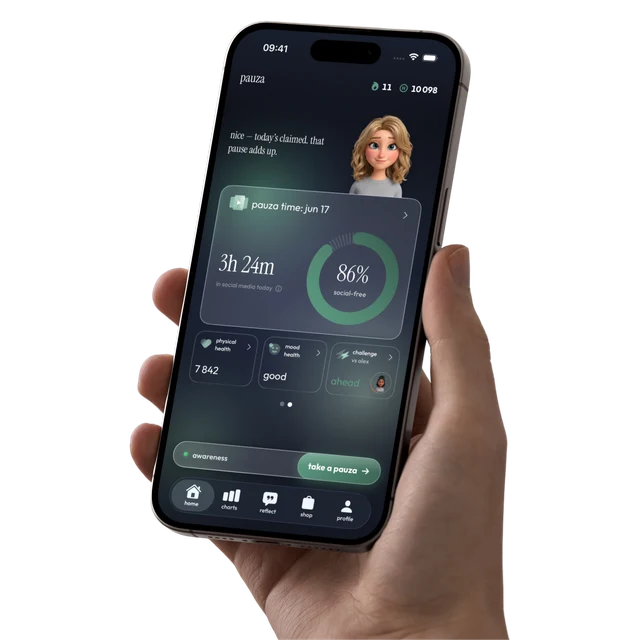
frequently asked questions
Does the screen time widget track all my device activity?
No, the widget focuses on app usage and time spent actively engaging with your device. Background activity, phone calls, and some system features are usually excluded.
Why does my screen time seem lower than expected?
Screen Time may miss certain activities, such as background app use, audio playback, or system apps. For a more complete view, check the full report in Settings.
Can I customize what the widget shows?
You can adjust the widget's size and choose between daily and weekly summaries. For more detailed information, tap the widget to open the full Screen Time dashboard.
Is the screen time widget available on all iPhones?
The widget is available on iPhones running iOS 14 or later. Some advanced features require newer versions of iOS.
Does tracking screen time help reduce my usage?
Awareness can be a helpful first step, but most research suggests that tracking alone may not dramatically change habits. Combining tracking with goal-setting or accountability is usually more effective.
Is my screen time data private?
Apple processes screen time data locally on your device. If you use Family Sharing, some usage data can be shared with family members, but it is not sent to Apple servers.
free tools
- screen time calculator — see what your daily hours add up to over a year
- average screen time statistics — how your usage compares to the latest data
- phone habit test — a 2-minute check of your phone habits