screen time on mac: what it tracks, what it misses, how to read it

Screen time on Mac measures how much time you spend using apps and websites on your Apple computer. While it gives a useful overview, its data isn’t perfect and doesn’t capture every type of activity. Understanding both its strengths and blind spots can help you use it more wisely.
Screen time on Mac is a built-in Apple tool that tracks how much time you spend using different apps and websites on your Mac. It provides daily and weekly reports, lets you set limits, and helps you monitor digital habits, but it doesn’t record every type of use.
key takeaways
- Screen time on Mac tracks app and website use, but misses some background and non-tracked activities.
- It helps spot patterns and set limits, but its reports can be incomplete or misattribute time.
- Knowing its limitations is key for making real changes to your digital habits.
- Using additional tools or rewards, like Pauza for iPhone, can complement Mac screen time tracking.
what is screen time on mac?
Screen time on Mac is a built-in feature from Apple that monitors and reports how you use your computer. It tracks the time you spend in each app and on specific websites, giving you daily and weekly summaries. You can find it in System Settings under 'Screen Time.'
This tool is designed to help you become more aware of your digital habits. It also lets you set app limits, downtime schedules, and content restrictions, similar to its iPhone and iPad versions.
Some users also use apps like Pauza on their iPhones alongside Mac’s built-in screen time, to build a fuller picture of their overall habits.
how does screen time on mac actually work?
Screen time on Mac runs in the background, logging the active app or website window you’re using. It records how long each app or website is active in the foreground. These details are then summarized in reports you can view in your Mac's settings.
Screen time can sync data across your Apple devices if you use the same Apple ID and have the option enabled. This means time spent on your iPhone, iPad, and Mac can be combined for a total view.
However, it only measures activity when an app or browser window is actively open and being used. If you leave your Mac on with an app open but walk away, it may still count that time, which can distort your real usage.
- Tracks active apps and websites in the foreground
- Summarizes usage into daily and weekly reports
- Lets you set app and category time limits
- Can sync data across devices using the same Apple ID

what the evidence supports—and where it falls short
Screen time data can help you spot trends, such as which apps consume most of your day. Research shows that awareness of habits is a first step toward change, but simply tracking time doesn't guarantee improvement.
The science is solid that excessive screen use can affect wellbeing, but current research is mixed about what amount is 'too much.' For example, people spend an average of 6 hours and 38 minutes online each day across all devices (source: DataReportal, Digital 2025). However, much of this is for work or education, not just entertainment.
Screen time on Mac does not track everything. It may miss time spent in some background processes, non-standard apps, or when you’re using remote desktop tools. Reports can also misattribute time if you leave windows open while away from your device.
how to use screen time on mac in daily life
To get started, open System Settings > Screen Time on your Mac. Here you can enable Screen Time if it’s not already on. Use the 'App Usage' and 'Website Usage' tabs to see where your time goes.
Set 'Downtime' to schedule breaks, and 'App Limits' to cap your use of distracting apps. Remember, these limits are easy to override, so it’s more about awareness than strict enforcement.
If you want to set goals or compete with friends, consider using additional tools. For example, Pauza on iPhone rewards you for time off social media and lets you make friendly bets with others to reduce screen time—providing a social motivation that Mac's built-in tool lacks.
- Open System Settings > Screen Time
- Review your daily and weekly app usage reports
- Set Downtime and App Limits as needed
- Sync data across devices for a bigger picture
- Try a screen time calculator to make your usage tangible
common misunderstandings about screen time on mac
Many people think screen time on Mac tracks every moment spent on the computer, but it only logs time spent with an app or website active in the foreground. Background activity, music playing, or apps running without your direct interaction are often missed.
Another misconception is that all screen time is equally 'bad.' Work, study, and entertainment time are reported together, but their impact can differ greatly for your productivity and wellbeing.
Finally, some users assume the numbers are precise. In reality, walking away from your desk with a window open can inflate your usage, and split-screen or multi-user setups may confuse the reports.
tools and next steps for healthier screen habits
If you want to go beyond Mac’s built-in tools, consider apps that reward time away from your device or help you compete with friends. Pauza, for example, turns minutes off your iPhone into tokens and lets you have friendly competitions—giving you motivation beyond simple awareness.
You can also use external screen time calculators for more detailed analysis, or compare your numbers to the average screen time to get context. Remember: tracking is only a first step. Combining it with intention, social support, and routine changes makes a bigger difference.
Regularly reviewing your screen time data, setting achievable goals, and experimenting with small habit shifts can help you find what balance works best for you.
by the numbers
- People spend an average of 6 hours and 38 minutes online across all devices each day.— DataReportal, Digital 2025
Curious about your digital habits? Try Pauza on iPhone to make your off-screen time more rewarding, and see how it pairs with your Mac usage.
Get Pauza on iPhone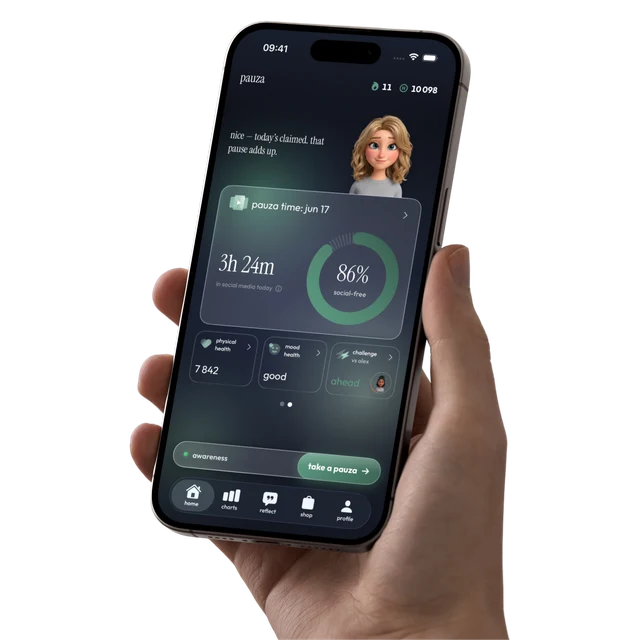
frequently asked questions
does screen time on mac track everything I do on my computer?
No. It only tracks time when apps or websites are active in the foreground. Background tasks, music, or non-standard apps may go unrecorded.
can I see which websites I spend the most time on, not just apps?
Yes. Screen time on Mac shows website usage for supported browsers like Safari, but may not track all browsers or private windows.
does it combine my Mac and iPhone screen time?
If you use the same Apple ID and enable 'Share Across Devices,' screen time combines data from all your Apple devices for a fuller view.
how accurate are the reports?
Reports are generally accurate for active use, but can be inflated if you leave apps open while away or use split-screen/multiple user accounts.
can screen time help me use my Mac less?
It can help you become more aware of your habits and set limits, but real change usually requires intention, support, and sometimes additional tools.
is all screen time 'bad' for you?
Not necessarily. The impact depends on what you’re doing—work, learning, and creative projects are very different from passive scrolling or multitasking.
free tools
- screen time calculator — see what your daily hours add up to over a year
- average screen time statistics — how your usage compares to the latest data
- phone habit test — a 2-minute check of your phone habits