how to manage your phone during exam season

Managing your phone during exams means creating boundaries that help you focus, not just blocking apps. It’s about understanding your habits, making small, deliberate changes, and using tools that encourage breaks. With the right strategies, you can protect your study time without feeling isolated or stressed.
To manage your phone during exams, set clear study periods, use built-in iPhone features to reduce interruptions, and create phone-free zones. Prioritize meaningful breaks and consider apps that reward time away from your device to stay motivated and focused without feeling deprived.
key takeaways
- Use iPhone’s Focus and Screen Time features to reduce distractions while studying.
- Physical separation from your phone is more effective than relying on willpower alone.
- Meaningful, non-digital breaks help prevent burnout and support focus during exam season.
- Apps that reward time off your phone can make self-control feel less punishing.
why phone distractions spike during exam season
Exam periods often heighten stress, so it’s natural to reach for your phone as a quick escape. Notifications, social feeds, and messaging apps become more tempting when you’re stuck on a tricky problem or just need a mental break. This can spiral—every glance at your phone interrupts your concentration and makes it harder to get back into deep focus.
Research shows that nearly half of U.S. teens (46%) say they are online almost constantly (Pew Research Center, 2024). During exams, this tendency to check in 'just for a minute' can easily add up to hours lost. If you’re like most people, you may underestimate how much small distractions chip away at your study time.
Being aware of why you reach for your phone—boredom, anxiety, or habit—can help you plan better strategies. Apps like Pauza use this understanding to encourage time off your device, giving you small rewards for every minute you stay present.
- Stress makes quick distractions more appealing.
- Notifications can trigger mindless scrolling.
- Short breaks often become longer than intended.
setting up your iphone: focus and screen time features
The iPhone offers built-in tools designed to help you control distractions. The Focus feature (Settings > Focus) lets you silence notifications from specific apps or contacts during custom study periods, so only urgent messages break through. Set up a 'Study Focus' mode and link it to your calendar, so it automatically activates during planned revision sessions.
Screen Time (Settings > Screen Time) allows you to set daily limits for specific apps or categories like social media and games. You can also schedule 'Downtime,' which blocks access to most apps outside of chosen hours. For added accountability, use a Screen Time passcode that only a parent, sibling, or trusted friend knows.
Turning on 'Silence Unknown Callers' and disabling banner notifications on the lock screen further reduces temptation. It’s worth exploring a screen time calculator to get a realistic picture of how much time you actually spend on your phone during exams.
- Go to Settings > Focus and create a custom 'Study' Focus.
- Set allowed contacts and apps for essential communication only.
- Schedule Focus times to match your study routine.
- Use Screen Time to set app limits and Downtime.
- Ask someone you trust to set the Screen Time passcode.

physical boundaries: making your phone less accessible
Moving your phone out of arm’s reach is one of the most effective ways to avoid unplanned checking. Studies on habit formation suggest that environmental cues—like having your phone on the desk—make it harder to resist. Try placing your phone in another room, in a backpack, or even on a high shelf during study sessions.
If you need your device for reference or music, consider using 'guided access' (Settings > Accessibility > Guided Access) to lock your phone into a single app. This prevents you from casually switching to distracting apps mid-session.
Physical separation is often more powerful than relying on self-control. Over time, you may find your urge to check your phone during exams naturally fades when the device isn’t constantly within sight.
- Keep your phone out of your study space.
- Use guided access for single-purpose use.
- Charge your phone in a different room.
designing better breaks (and why mindless scrolling doesn’t help)
Not all breaks are equal. Picking up your phone for a few minutes of social media can easily turn into a half-hour detour. U.S. teens use an average of about 9 hours of entertainment media per day, not counting schoolwork (Common Sense Media). During exam season, it’s easy for breaks to blur into procrastination.
To avoid this, plan short, intentional breaks that actually refresh you. Step outside for a five-minute walk, stretch, or grab a snack away from screens. Meet a friend for a quick chat or do something tactile—like doodling or tidying up your space.
If you do want a digital break, set a timer before you open entertainment apps, or use your iPhone’s Downtime to automatically end the session. The goal is to return to studying feeling reset, not more distracted.
using positive reinforcement to build healthier phone habits
Removing your phone is only part of the solution—making time away from your device feel rewarding helps new habits stick. Instead of focusing on what you can’t do, try to notice the calm, focus, or sense of accomplishment that comes from uninterrupted study.
Apps like Pauza turn time spent off social media into tokens and streaks, making self-control feel more like a game than a punishment. You can even challenge a friend to see who can go the longest without unnecessary scrolling—sometimes a little friendly competition helps.
Remember, these tokens don’t have cash value, but they can help you visualize progress and stay motivated. Over time, you may find that the real reward is simply getting your work done with less stress.
when you have to use your phone: minimizing necessary distractions
Sometimes, you genuinely need your phone during exams—for research, collaboration, or quick fact-checking. The key is to minimize the risk of sliding into unrelated apps. Use your phone’s search function to go directly to what you need, bypassing the home screen and its tempting icons.
Consider grouping distracting apps in a separate folder on the last page of your home screen, or uninstalling them temporarily. You can enable grayscale mode (Settings > Accessibility > Display & Text Size > Color Filters) to make your phone less visually appealing during study sessions.
After your task is done, put your phone away again as soon as possible. These small steps add up, creating a healthier relationship with your device and keeping your focus where it matters most.
by the numbers
- Nearly half of U.S. teens (46%) say they are online almost constantly — roughly double the share a decade ago.— Pew Research Center, 2024
- U.S. teens use an average of about 9 hours of entertainment media per day, not counting schoolwork.— Common Sense Media
Try Pauza on your iPhone to turn time away from your phone into something positive, especially during exam season. Small changes now can make your study time more focused and less stressful.
Get Pauza on iPhone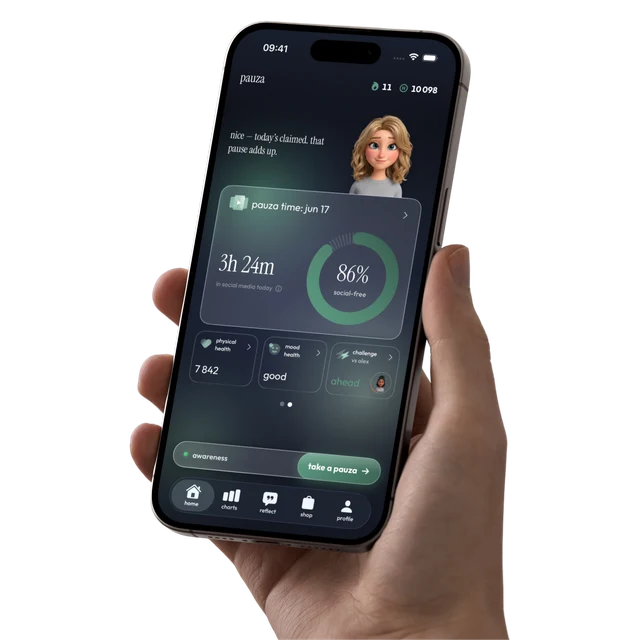
frequently asked questions
How can I stop checking my phone every few minutes while studying?
Try placing your phone out of reach and silencing notifications using Focus mode. Physical distance is often more effective than willpower alone.
Is it better to block apps or reward myself for time off my phone?
Both strategies can help, but positive reinforcement—like tracking progress or earning in-app rewards—often leads to more lasting change than strict blocking.
What’s a healthy amount of phone use during exam season?
There’s no single rule, but aim to keep entertainment and social media use to a minimum during focused study periods. Compare your habits to the average screen time to get perspective.
What if I need my phone for study-related tasks?
Use features like guided access or app limits to stay on track, and put your phone away as soon as you’re done with the required task.
Can apps like Pauza help with phone management during exams?
Apps that reward time spent away from your phone, like Pauza, can make self-control feel less restrictive and help you build new habits with less pressure.
Should I uninstall social media apps entirely?
If you find temporary uninstallation helps you focus, it’s a valid strategy. Otherwise, consider moving these apps off your home screen or setting strict usage limits.
free tools
- screen time calculator — see what your daily hours add up to over a year
- average screen time statistics — how your usage compares to the latest data
- phone habit test — a 2-minute check of your phone habits