how screen time affects your relationships

Screen time and relationships are deeply connected: the way you use your phone can influence how you relate to others—both positively and negatively. Too much screen time can reduce quality moments and weaken communication, while mindful use can preserve connection. This guide explains how screen habits impact your relationships and how to make conscious choices.
Screen time can affect your relationships by reducing face-to-face communication, increasing misunderstandings, and limiting shared experiences. Excessive device use often leads to distraction and emotional distance, while mindful screen habits can help protect and even strengthen your connections with friends, family, and partners.
key takeaways
- High screen time often leads to less meaningful in-person interaction.
- Frequent phone use can cause misunderstandings and emotional distance.
- Setting clear device boundaries protects time with loved ones.
- Small habit shifts, like tracking your screen use, make a real difference.
the invisible divide: how screens change how we relate
The presence of a phone, even when not in use, can subtly alter the tone of a conversation. Researchers call this the 'phone proximity effect'—knowing a phone is nearby can make people less likely to share deeply or feel truly listened to. This effect is often unnoticed, but it shapes how safe and valued people feel in your company.
Screen time and relationships are closely linked because digital distractions interrupt the flow of face-to-face connection. A quick glance at a notification during dinner or a chat can signal to the other person that your attention is divided, even if you don't intend it. Over time, these small moments add up, leading to a sense of emotional distance.
Apps like Pauza help you become more aware of these habits by tracking your time off-screen, making it easier to notice when and why you reach for your device.
communication breakdown: when digital interrupts real talk
Misunderstandings often happen when messages are split between digital and in-person channels. A partner may interpret your silence as disinterest if you're absorbed in your phone. Even brief interruptions—like checking a message mid-conversation—can break the rhythm of communication, making it harder to pick up where you left off.
Constant notifications and the habit of multitasking with screens can erode trust. When someone feels they're competing with your device for attention, it may lead to frustration or withdrawal. Over time, this cycle can become a barrier to honest sharing and emotional intimacy.
To minimize these breakdowns, try setting specific times when devices are put aside. Small rituals, like a 'phone basket' during meals, can create space for more attentive conversation.
- Turn off non-essential notifications during shared time.
- Use 'Do Not Disturb' mode (Settings > Focus > Do Not Disturb) when talking with loved ones.
- Agree on device-free times, like meals or before bed.

quality vs. quantity: why shared moments matter more than hours
It's not just how much time you spend with others—it's how present you are. Even long hours together can feel shallow if both people are half-engaged with their phones. By contrast, a short, fully attentive conversation can strengthen your bond more than hours spent in distracted company.
The average internet user spends 2 hours and 21 minutes on social media every day (DataReportal, Digital 2025). Compare that to the average screen time you share with family or friends—often, screens win out. Making a conscious choice to set aside devices, even for just 20–30 minutes, can transform the quality of your interactions.
A screen time calculator makes those hours concrete, helping you identify when your attention is most needed and where small changes can have the biggest impact.
- Identify your peak screen times using iPhone Screen Time (Settings > Screen Time > See All Activity).
- Pick one daily routine—like dinner or the commute home—to make device-free.
- Check in weekly: are you having more meaningful moments?
the ripple effect: how screen habits shape families and friendships
Your phone habits don't just affect you—they ripple out to those around you. In families, if one person is often on their device, others may mirror that behavior, leading to more solo screen time and fewer shared activities. Among friends, constant scrolling can create a culture of distraction, where everyone is half-present.
Nearly half of U.S. teens (46%) say they are online almost constantly, according to Pew Research Center. This always-on pattern can make it harder to develop the social skills needed for deeper connection, especially among younger people.
Modeling mindful phone use—such as putting your device out of reach during conversations—sets a positive example. Apps like Pauza can support these changes by rewarding time spent off your phone and offering friendly competition with others.
- Create shared device rules for group activities.
- Plan regular screen-free evenings or outings.
- Talk openly about phone habits and their impact.
setting boundaries: practical ways to protect your connections
Boundaries are essential for balancing digital life and relationships. Start by setting clear zones or times in your day that are device-free—such as bedrooms, meal tables, or the hour before bed. On iPhone, use Screen Time settings (Settings > Screen Time > Downtime) to schedule device breaks automatically.
Communicate openly with those you live with or care about. Let them know your intentions for reducing screen time and ask for their support or input. Collaboration makes boundaries easier to maintain and less likely to feel like rules imposed from above.
For added motivation, invite a friend or partner to join you in a screen time challenge, using an app like Pauza. Its friendly bets and tokens can help make the change less about restriction and more about shared accountability.
reconnecting: rebuilding habits for deeper relationships
If you feel your relationships have suffered from too much screen time, it's not too late to change. Start with small, specific actions—like one device-free activity per week, or a nightly check-in with a loved one where phones are put away.
Notice which moments feel most rewarding, and try to build on them. Journaling or simply reflecting at the end of the day can help you spot patterns: when are you most tempted to reach for your phone, and when do you feel most connected to others?
Apps that reward mindful use—such as Pauza—can make it easier to notice progress and keep motivation high. Ultimately, the goal is to create habits that protect and deepen your real-world connections, not just reduce screen time for its own sake.
by the numbers
- The average internet user spends 2 hours and 21 minutes on social media every day.— DataReportal, Digital 2025
- Nearly half of U.S. teens (46%) say they are online almost constantly — roughly double the share a decade ago.— Pew Research Center, 2024
Ready to strengthen your relationships by being more present? Try Pauza on iPhone and see how small changes in screen habits can make a real difference.
Get Pauza on iPhone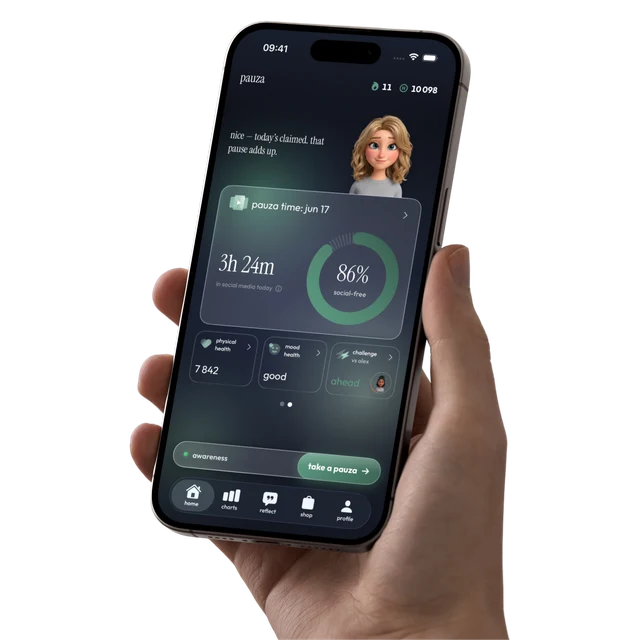
frequently asked questions
Can screen time really harm my relationships?
Excessive screen time can lead to less face-to-face interaction, more misunderstandings, and a sense of emotional distance. Small habits, like checking your phone during conversations, can add up over time.
How much screen time is too much for relationships?
There’s no strict number, but if screen use regularly interrupts conversations or shared activities, it may be time to set new boundaries. Compare your habits to the average screen time to get perspective.
What are some easy ways to reduce screen time with family or friends?
Try device-free meals, use 'Do Not Disturb' mode during important conversations, and plan regular screen-free activities together. Involving others in your goals creates positive accountability.
Can apps help me build healthier screen habits?
Yes, some apps can track your off-screen time, reward mindful use, or encourage friendly competition to reduce screen time. Choose an app that fits your style and privacy needs.
Is it okay to use my phone for connecting with loved ones?
Absolutely—video calls, messaging, and shared online activities can bring people closer, especially at a distance. The key is to balance digital connection with real-world presence.
What if my friends or family don’t want to put their phones away?
Start with open conversations about how screen time affects your time together. Suggest small, shared experiments—like one device-free meal—and focus on the benefits, not just the rules.
free tools
- screen time calculator — see what your daily hours add up to over a year
- average screen time statistics — how your usage compares to the latest data
- phone habit test — a 2-minute check of your phone habits