how social media hijacks your dopamine (in plain english)
Yes, social media can hijack your dopamine system, making scrolling feel rewarding and hard to stop. But the science is more nuanced than headlines suggest. This explainer breaks down what dopamine does, how social platforms influence it, and what you can actually do to regain control—with or without an app.
Dopamine and social media are linked because social platforms use notifications, likes, and endless feeds to trigger dopamine release in the brain, reinforcing checking and scrolling habits. This makes social media feel rewarding, but it's not true addiction—dopamine shapes habit loops, not uncontrollable cravings.
key takeaways
- Social media triggers dopamine, reinforcing the urge to check and scroll.
- Dopamine does not create true addiction, but it does form strong habits.
- Science supports the link, but not all claims about dopamine and social media are proven.
- Simple changes—like turning off notifications—can help break the cycle.
what is dopamine, and why does it matter?
Dopamine is a chemical messenger in your brain that plays a key role in motivation, reward, and habit formation. It's released when you anticipate something pleasurable or achieve a goal—think of it as the brain's way of saying 'that was good, do it again.'
Dopamine itself does not create pleasure; instead, it drives you to seek out rewarding experiences. This is why it's closely tied to how habits—good or bad—form over time.
Social media platforms are designed to provide frequent, unpredictable rewards, which can keep you coming back for more. Apps like Pauza help users become more aware of this cycle by rewarding time spent away from social feeds.
how social media triggers dopamine
Every time you get a like, comment, or notification, your brain receives a small hit of dopamine. Social media platforms intentionally use these triggers to keep you engaged. The endless scroll, unpredictable updates, and social feedback all contribute to a cycle of checking and re-checking your phone.
This works similarly to how slot machines operate: unpredictable rewards are more powerful than predictable ones. The anticipation of something new or exciting—rather than the reward itself—drives the urge to check your feed.
Because of this, many people find it difficult to stop scrolling, even when they intend to take a break.
- Likes and comments provide instant social validation.
- Push notifications create frequent interruptions.
- Endless feeds make it hard to find a natural stopping point.

what the science really says (and doesn’t)
Research shows that dopamine is involved in reinforcing behaviors, but experts caution against calling social media use a true 'addiction.' While the habit-forming nature is real, it's not the same as addiction to substances like drugs or alcohol.
According to DataReportal, the average internet user spends 2 hours and 21 minutes on social media every day. This reflects how engaging these platforms can be, but it doesn't prove that everyone is 'addicted' in a clinical sense.
Studies support that notifications and unpredictable rewards drive more frequent app use, but it's less clear how much this shapes long-term mental health. The evidence for severe harm is mixed; many people use social media without major issues, while others struggle to cut back.
- Dopamine reinforces habit loops, but does not cause uncontrollable cravings.
- Most research supports the idea of habit formation, not full-blown addiction.
- The average screen time varies widely between individuals.
how to break the cycle: practical steps
If you want to reduce your social media use, start by making the dopamine triggers less frequent and less rewarding. The following steps are simple but effective for most people.
On iPhone, you can go to Settings > Notifications and turn off non-essential alerts for social apps. Next, try moving social media apps off your home screen, or set daily limits in Settings > Screen Time > App Limits.
Using a tool like a screen time calculator can help you see how your habits compare to the average screen time, making the problem feel more concrete.
- Disable push notifications for social apps.
- Set daily time limits for each social platform.
- Move distracting apps off your main home screen.
- Schedule specific times to check social media, rather than opening apps impulsively.
- Track your screen time and reflect on your patterns each week.
common myths and misunderstandings
It's a myth that dopamine itself is addictive or that social media use is always harmful. Dopamine helps shape habits, but doesn't make you lose control.
Another misunderstanding is that quitting social media entirely is the only solution. For many, small changes—like reducing notifications or using apps like Pauza to reward time off-device—can be enough to regain balance.
Finally, remember that everyone’s brain is different. What feels compulsive for one person may not be an issue for another.
tools and next steps for healthier habits
Several tools can support healthier social media habits. Apple’s built-in Screen Time features let you monitor and limit use. Apps like Pauza go further, rewarding you for time away from your phone with tokens and streaks, and even letting you challenge friends to see who can scroll less.
You don’t need to quit social media entirely—start by making small adjustments and paying attention to how you feel. Reflecting on your weekly screen time can help you notice progress or spot patterns that need attention.
If you want a simple way to stay motivated, try setting a daily goal and tracking your streak. Even a few minutes less each day adds up over time.
by the numbers
- The average internet user spends 2 hours and 21 minutes on social media every day.— DataReportal, Digital 2025
Ready to take control of your screen time? Download Pauza on your iPhone to make every minute off social media more rewarding.
Get Pauza on iPhone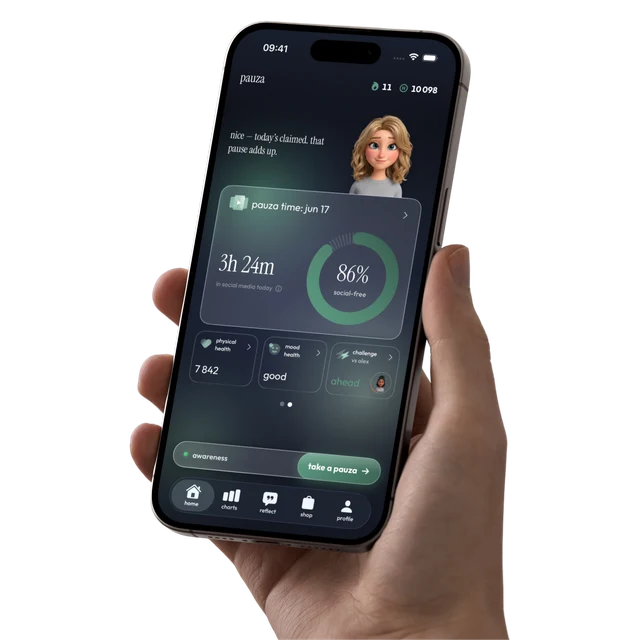
frequently asked questions
Is social media actually addictive?
Most experts agree that social media forms strong habits, but it doesn’t meet the clinical definition of addiction for most people. Dopamine reinforces the urge to check, but true loss of control is rare.
What is the role of dopamine in social media use?
Dopamine is released in anticipation of rewards—such as likes or notifications—making you want to check apps more often. It shapes habits, not pleasure itself.
Can turning off notifications help?
Yes. Turning off notifications reduces the frequency of dopamine-triggering cues, making it easier to break the habit of frequent checking.
Do all people respond to social media the same way?
No. Some people are more sensitive to habit-forming cues than others. Genetics, personality, and environment all play a role in how sticky social platforms feel.
Are there tools to help reduce social media use?
Yes. iPhone’s Screen Time settings, screen time calculators, and apps like Pauza can all help you track and manage your habits in concrete ways.
Is quitting social media necessary for better mental health?
Not necessarily. For many, setting boundaries and reducing time spent on social media is enough to notice benefits—complete abstinence is rarely required.
free tools
- screen time calculator — see what your daily hours add up to over a year
- average screen time statistics — how your usage compares to the latest data
- phone habit test — a 2-minute check of your phone habits