how notifications hijack your focus (and how to take it back)

Notifications and focus are closely linked: every buzz, ping, or pop-up is designed to capture your attention, often at the expense of what you truly want to concentrate on. Even brief interruptions can scatter your thoughts and make deep work harder. Understanding the mechanics behind this distraction is the first step to regaining control.
Notifications can hijack your focus by interrupting your attention with alerts, sounds, or vibrations, making it harder to concentrate on tasks. To regain control, use built-in device features to limit alerts, schedule focus times, and make mindful choices about which notifications you allow.
key takeaways
- Even brief notifications can disrupt focus and make it harder to return to your original task.
- Customizing notification settings on your iPhone is the most direct way to reduce distractions.
- Scheduling dedicated focus times and using well-being apps can help retrain your attention.
- Disabling non-essential alerts gives your brain the space to concentrate deeply.
why notifications are so distracting
Notifications are engineered to capture your attention instantly. Each alert, whether visual, auditory, or haptic, creates a sense of urgency that pulls you away from what you’re doing. This is not accidental—app designers know that immediate responses boost engagement.
Research shows that even a brief interruption can fragment your thinking. When you’re pulled away by a notification, it takes time to refocus on your original activity. This phenomenon is called 'attention residue,' and it means your mind lingers on the interruption even after you’ve dismissed it.
For many people, these constant disruptions add up. Comparing your alerts to the average screen time can be an eye-opener. The more frequently you’re interrupted, the harder it becomes to maintain deep, sustained focus on any one task.
the science behind attention and interruption
Our brains are wired to notice novelty—any sudden sound or vibration triggers a quick shift in attention. This was useful for survival, but modern notifications exploit the same reflex, making it difficult to ignore them.
A study from Microsoft found it takes an average of 23 minutes to get back on track after a distraction. While not every notification is equally disruptive, the cumulative effect can erode your ability to concentrate over the course of a day.
This constant switching also increases cognitive fatigue. Over time, your ability to filter out distractions weakens, and you may find yourself reaching for your phone even when it's silent. Apps like Pauza leverage this insight by rewarding time away from your device, making it easier to build healthier habits.

how to audit your notifications on iphone
The first step to reclaiming focus is to see exactly which apps are interrupting you most. On iPhone, go to Settings > Notifications and review the list of all apps. Pause for a moment to consider which alerts are genuinely important and which are just noise.
Turn off notifications for non-essential apps by tapping each app and toggling 'Allow Notifications' off. For apps you want to keep, consider switching to 'Deliver Quietly' or disabling sounds and badges. This dramatically reduces the number of attention grabs throughout your day.
To see the impact, check your weekly Screen Time report (Settings > Screen Time). A screen time calculator makes those hours concrete, and you may be surprised at how much of your day is spent shifting between tasks due to unnecessary alerts.
- Open Settings on your iPhone.
- Tap Notifications.
- Scroll through the list and select an app.
- Toggle 'Allow Notifications' off or adjust alert style.
- Repeat for every app you don't need urgent alerts from.
designing your environment for deep work
Physical and digital environments both shape your ability to concentrate. Beyond turning off alerts, consider where you place your phone during important tasks. Keeping your device out of sight—even in another room—can help reduce the urge to check it.
Use Focus Modes on iPhone (Settings > Focus) to set up custom profiles for work, study, or downtime. You can whitelist only the most essential contacts and apps, silencing everything else. Schedule Focus Modes to activate automatically during your most productive hours.
Adding friction—like enabling Do Not Disturb or leaving your phone on silent and out of reach—makes it easier to stay immersed in what matters.
- Set up a dedicated workspace free from devices.
- Use noise-cancelling headphones or background sounds to block distractions.
- Communicate your focus times to family or colleagues.
- Place your phone face down or in another room.
building healthier notification habits
Long-term change comes from consistent habits. Start by scheduling daily tech-free periods, even if just 15–30 minutes at first. Use this time for reading, exercise, or face-to-face conversation—anything that doesn’t involve a screen.
Batch notifications where possible. For example, set messaging apps to 'Manual Fetch' or check email at set times rather than as soon as alerts arrive. This lets you stay in control of your attention instead of handing it to your phone.
If you want extra motivation, try a digital wellbeing app that rewards you for staying off your phone. Pauza tracks time away from social media and gives you in-app tokens, streaks, and even lets you challenge friends to see who can keep their screen time lowest. Because raw usage data stays on your device, your privacy is respected.
what to expect when you reduce notifications
Many people experience restlessness at first—a sense of missing out or anxiety about not being instantly reachable. This is normal and tends to fade after a few days as your brain adjusts to fewer interruptions.
Over time, most users report feeling calmer and more in control of their attention. Tasks that once felt overwhelming become easier to complete without constant breaks. You may also notice improved mood and better sleep, as late-night notifications no longer jolt you awake.
If you’re curious about how your habits compare, remember that the average internet user spends 2 hours and 21 minutes on social media every day (DataReportal, Digital 2025). Reducing unnecessary alerts is a practical way to reclaim some of that time for yourself.
by the numbers
- The average internet user spends 2 hours and 21 minutes on social media every day.— DataReportal, Digital 2025
Ready to take back control of your attention? Download Pauza on iPhone to start building better notification habits, one focused moment at a time.
Get Pauza on iPhone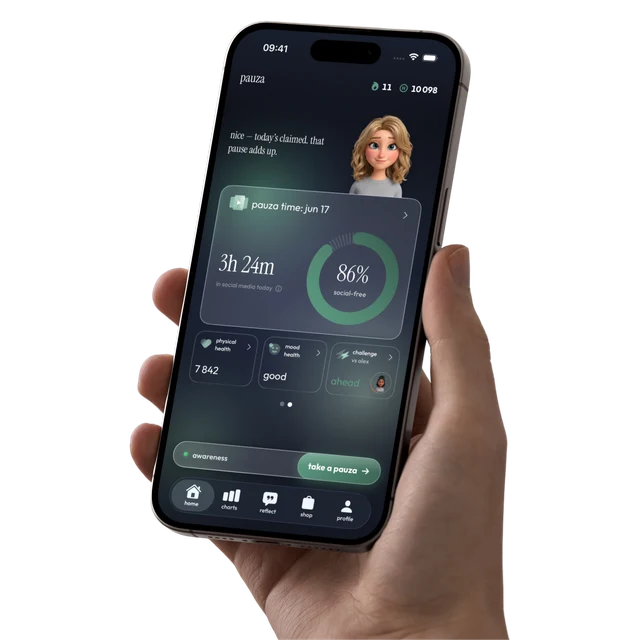
frequently asked questions
How do notifications impact focus?
Notifications interrupt your attention, making it harder to concentrate and increasing the time needed to return to your original task. Even small interruptions can disrupt deep work.
What are the best iPhone settings to reduce notification distractions?
Use Settings > Notifications to turn off non-essential alerts, and set up Focus Modes in Settings > Focus to whitelist only the most important contacts and apps during work or downtime.
Is it better to turn off all notifications or just some?
It's best to keep only the notifications you truly need—such as for calls or urgent messages—and disable the rest. This reduces distraction while still letting through critical alerts.
How long does it take to get used to fewer notifications?
Most people feel restless or anxious for the first few days, but this usually fades as your brain adapts. Over time, you’re likely to experience improved focus and a greater sense of calm.
Can apps help me improve my focus?
Yes, certain digital wellbeing apps can support better habits by rewarding time away from your phone and helping you track progress. Choose an app that respects your privacy and encourages mindful use.
What if I miss an important message?
You can configure your device to allow calls or texts from key contacts, even when most notifications are silenced. Focus Modes and custom settings make it easy to strike a balance.
free tools
- screen time calculator — see what your daily hours add up to over a year
- average screen time statistics — how your usage compares to the latest data
- phone habit test — a 2-minute check of your phone habits