how to use downtime on iphone to schedule real breaks

To use Downtime on iPhone for real breaks, set a daily schedule that automatically limits app usage during your chosen hours. This feature lets you block most apps and notifications, making it easier to step away with intention. Here’s how to make Downtime work for your actual needs—not just as a background setting.
To use Downtime on iPhone, go to Settings > Screen Time > Downtime, toggle it on, and set your preferred start and end times. During these hours, only allowed apps and phone calls will be available, helping you take scheduled breaks from your device and limit distractions.
key takeaways
- Downtime on iPhone can automatically block most apps during scheduled hours for real breaks.
- You control which apps and contacts remain accessible while Downtime is active.
- Customizing Downtime can create non-negotiable periods away from your phone.
- Combining Downtime with mindful habits or apps like Pauza can make breaks more rewarding.
what is downtime on iphone and when does it work best?
Downtime is an iOS feature that restricts access to most apps and notifications during scheduled hours you choose. Unlike a manual Do Not Disturb mode, Downtime acts as a digital gatekeeper—only allowing specific apps or contacts you’ve approved. This can be essential when you want to create genuine time away from your phone, not just silence alerts.
Downtime works best for non-negotiable breaks: study hours, bedtime routines, or even dedicated focus sessions. It’s particularly effective if you find yourself reaching for your phone out of habit rather than need.
Many people set Downtime overnight, but scheduling it during work or family hours can be just as powerful. For even greater effect, pair Downtime with other strategies—like turning your phone face down or using a tool like Pauza to reward off-screen time.
how to set up downtime on your iphone
Setting up Downtime is straightforward, but a few extra steps ensure it aligns with your real-life schedule. Start by opening Settings, tap Screen Time, then select Downtime. You can enable ‘Turn On Downtime Until Tomorrow’ for an immediate break, or tap ‘Scheduled’ to set consistent start and end times each day.
Customize your schedule: for example, you might choose 9:00 pm to 7:00 am for evenings, or block a two-hour period during work or study. You’re not limited to one block—iOS 17 and later allow customizing Downtime schedules by day of the week.
It’s important to select which apps and contacts are always allowed during Downtime. By default, only essential apps like Phone and Messages are enabled, but you can adjust this in Screen Time settings.
- Go to Settings > Screen Time > Downtime.
- Turn on Downtime and tap ‘Scheduled’.
- Set your daily start and end times.
- Tap ‘Always Allowed’ to pick apps and contacts you want available during Downtime.
- Review your settings and adjust as needed for weekends or special days.

customizing downtime for meaningful breaks—not just sleep
While the default suggestion is to use Downtime for sleep, its real benefit comes from customizing it for your true break needs. Consider scheduling it for meal times, focused creative work, or family activities—periods when you want your attention off your device.
Think about your high-risk times for unnecessary scrolling. For instance, if you notice you lose 30 minutes to social media after lunch, try scheduling Downtime from 1:00 pm to 2:00 pm. You can adjust these periods as you learn which times are most beneficial.
Allow yourself access only to apps genuinely needed during breaks. For example, you might keep access to music or meditation apps but block social media and news. This makes your break feel intentional rather than simply a gap in screen time.
overcoming loopholes and sticking to your downtime
It’s easy to override Downtime with a simple tap, which can weaken your resolve if you’re tempted. To make Downtime truly effective for breaks, try setting a Screen Time passcode—ideally one that only a trusted family member knows, or that you make deliberately hard to recall.
Avoid the common pitfall of ‘just one more scroll’ by keeping your phone out of sight during Downtime. Consider leaving it in another room or placing it in a drawer. Physical distance reinforces your commitment, especially in the first few weeks.
If you catch yourself repeatedly bypassing Downtime, review your schedule and allowed apps. Are you giving yourself too much leeway? Tighten your settings, or try pairing your break with a rewarding activity—like stepping outside, reading a book, or using a screen time calculator to see how much time you’re actually reclaiming.
- Set a Screen Time passcode to prevent easy overrides.
- Keep your phone physically distant during Downtime.
- Pair breaks with rewarding offline activities.
- Regularly review allowed apps and tweak as needed.
using downtime alongside other tools and habits
Downtime works best as part of a bigger approach to digital wellbeing. If you find that scheduled breaks aren’t enough, try combining Downtime with other iOS tools like Focus modes, app time limits, or third-party apps that reward you for staying off your phone.
For example, an app like Pauza turns minutes away from your device into in-app tokens and lets you compete with friends for the lowest screen time—building positive reinforcement into your breaks. This kind of gamification can make Downtime periods more satisfying and less about restriction.
If you want to better understand your patterns, compare your own habits to the average screen time or use a screen time calculator. Tracking your progress can help you see the real impact of scheduled breaks and motivate you to stick with them.
what to do during your scheduled breaks
Simply blocking apps isn’t enough—what you do during your Downtime matters. Choose activities that genuinely refresh you, whether it’s a walk around the block, a quick stretch, reading, or preparing a meal. The key is to make the break feel like a reward, not a punishment.
If you’re at work or studying, use Downtime to reconnect with colleagues, brainstorm on paper, or take a few deep breaths away from your screen. At home, try analog hobbies or spend time with family. Planning ahead makes it easier to resist the urge to pick up your phone.
It may take a few tries to settle into a routine that feels right. Be patient with yourself and adjust your Downtime schedule as you learn what works best for your energy and attention.
by the numbers
- The average internet user spends 2 hours and 21 minutes on social media every day.— DataReportal, Digital 2025
Ready to make your breaks more intentional? Try Pauza on iPhone to turn your Downtime into rewarding, phone-free moments.
Get Pauza on iPhone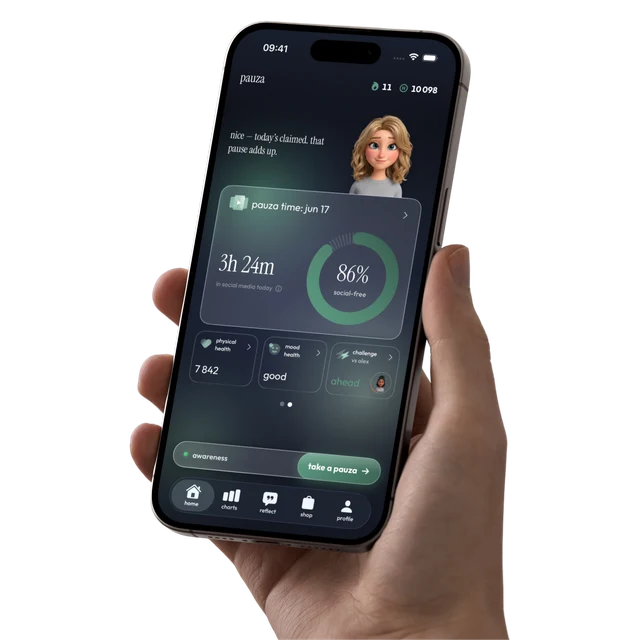
frequently asked questions
Can I allow specific apps during Downtime on iPhone?
Yes. Go to Settings > Screen Time > Always Allowed to select which apps and contacts remain accessible during Downtime.
Does Downtime block all notifications?
Most notifications are blocked, but calls and messages from allowed contacts will still come through if you’ve set them as exceptions.
Can I set different Downtime schedules for different days?
Yes, on iOS 17 and later, you can customize Downtime for each day of the week. This makes it easier to account for changing routines.
What happens if I try to open a blocked app during Downtime?
You’ll see a screen letting you know the app is unavailable. You can override this by entering your Screen Time passcode, if set.
Is there a way to make Downtime harder to override?
Set a Screen Time passcode that you don’t easily remember, or ask a family member to manage the code. This reduces the temptation to bypass restrictions.
Does Downtime affect alarms or emergency calls?
No. Alarms and emergency calls will still work even when Downtime is active, so you won’t miss critical alerts.
free tools
- screen time calculator — see what your daily hours add up to over a year
- average screen time statistics — how your usage compares to the latest data
- phone habit test — a 2-minute check of your phone habits