how to stay accountable to your phone goals

To stay accountable to your phone goals, you need clear intentions, honest tracking, and the right tools to help you notice and adjust your habits. Accountability isn’t just willpower—it’s about building systems that give you feedback and support. This guide offers specific, actionable steps to help you keep your phone use aligned with your intentions.
To stay accountable to your phone goals, set clear limits, use built-in iPhone features or third-party apps to monitor actual use, and add social or practical incentives. Regularly reviewing your progress, reflecting on patterns, and making small, realistic adjustments help you maintain your commitment over time.
key takeaways
- Specific, measurable goals make phone limits easier to follow.
- Real-time tracking tools and honest self-reviews keep you aware of habits.
- Social accountability—like friendly bets—adds extra motivation.
- Small, daily adjustments are more sustainable than big, sudden changes.
why most phone goals fail (and how to avoid it)
Many people set vague intentions to 'use my phone less,' but without specifics or feedback, these goals quickly fade. The sheer amount of time spent online makes it easy to lose track—people spend an average of 6 hours and 38 minutes online across all devices each day, according to DataReportal's Digital 2025 report. Without a plan to measure and check your behavior, motivation slips.
Setting accountable phone goals starts with clarity. Instead of 'less time on social media,' try 'check Instagram only after lunch, for 15 minutes.' Concrete goals are less likely to be ignored. A screen time calculator makes those hours concrete so you can see exactly where your time is going.
Accountability also means knowing why you want to change. Are you hoping to read more, sleep better, or feel less distracted at work? Write down your reason—visible reminders reinforce your commitment during weak moments.
- Vague goals lack urgency and measurement.
- Concrete, time-bound goals are easier to track.
- Understanding your motivation supports follow-through.
using your iphone’s settings for real feedback
Your iPhone has built-in tools that make it easier to monitor and control your usage. Start with Screen Time (Settings > Screen Time). Here, you can view daily and weekly reports, see which apps eat up your hours, and set App Limits for categories or specific apps. These features provide honest, automatic feedback—no extra effort needed.
Downtime (Settings > Screen Time > Downtime) lets you schedule blocks where only essential apps work. For example, set Downtime from 9 PM to 7 AM to protect your evenings and mornings. Don’t forget to use 'Always Allowed' to make exceptions for maps, calls, or other essentials.
Combine these settings with Focus modes (Settings > Focus) to silence notifications during work, meals, or study. Customizing Focus for certain times or locations helps reinforce your intentions and reduce temptation.
- Open Settings > Screen Time and turn it on.
- Review your weekly reports for patterns.
- Set App Limits for your biggest time-wasters.
- Schedule Downtime to protect key hours.
- Customize Focus for distraction-free moments.

the role of social accountability
Social incentives often keep us on track when motivation dips. Sharing your phone goals with a friend, partner, or group adds a layer of healthy pressure and encouragement. Even a simple check-in text—'How did you do this week?'—can nudge you to stick with your intentions.
Some apps now let you turn this into a friendly challenge. Pauza, for example, allows you to bet a friend that you’ll have the lowest screen time, adding a playful sense of competition without cash rewards. The focus is on mutual support and honest tracking—not winning money.
If public goals feel intimidating, start with a private accountability partner. Share your goal, report your progress, and celebrate small wins together. Over time, this gentle accountability can change your relationship with your phone.
- Tell a friend or group about your goal.
- Set up a weekly or daily check-in.
- Consider a friendly, non-cash competition.
- Celebrate progress together—no matter how small.
honest self-reflection: reviewing your patterns
Staying accountable means regularly reviewing your actual phone use—not just your intentions. Every Sunday, spend five minutes looking at your Screen Time summary. Notice which apps and hours spike your usage. Are there patterns—like endless scrolling before bed or during slow work meetings?
Jot down your biggest surprises. Maybe you didn’t realize how often you pick up your phone, or that social media use creeps up on weekends. Use these insights to adjust your goals, rather than criticizing yourself. Honest review helps you spot triggers and design better strategies.
Apps that keep your usage private on-device, like Pauza, can help you reflect without worrying about your data being sent elsewhere. By focusing on streaks and tokens as feedback—rather than judgment—you can make progress feel rewarding and concrete.
building practical incentives that last
Accountable phone goals work better when there’s a real-world benefit or reward. Instead of vague promises, tie your phone-free time to something you enjoy. For example, for every hour off your phone, add a small reward—like listening to a favorite album or taking a walk.
Some people prefer visual cues: put a sticky note near your charger as a reminder, or track your streaks on a calendar. Over time, these small incentives build momentum, making it easier to stick with your limits.
Be careful with rewards that involve more screen time—try to keep them offline when possible. The goal is to make the positive feelings of self-control and accomplishment stronger than the short-term hit of scrolling.
- Pair phone-free time with activities you enjoy.
- Use a physical tracker—like a calendar or jar of marbles.
- Celebrate streaks or milestones, not just total hours.
- Avoid rewards that involve more screen use.
adjusting your approach over time
Accountability isn’t static. Life changes—so should your phone goals. If you notice old habits creeping back, or if your limits feel too strict, adjust them. Start small: reduce one app’s limit by 10 minutes, or move your Downtime start time back by 15 minutes.
Compare your progress to the average screen time to stay realistic. For example, the average internet user spends 2 hours and 21 minutes on social media every day (DataReportal, Digital 2025). If you’re reducing from three hours to two, that’s a significant achievement.
Check in with your accountability partner or group each month. Share what’s working and what isn’t. Over time, making steady, mindful adjustments—rather than all-or-nothing changes—helps your new habits stick.
by the numbers
- People spend an average of 6 hours and 38 minutes online across all devices each day.— DataReportal, Digital 2025
- The average internet user spends 2 hours and 21 minutes on social media every day.— DataReportal, Digital 2025
Ready to make your phone habits more intentional? Try Pauza for iPhone to track your progress, build streaks, and add a little friendly accountability—without pressure.
Get Pauza on iPhone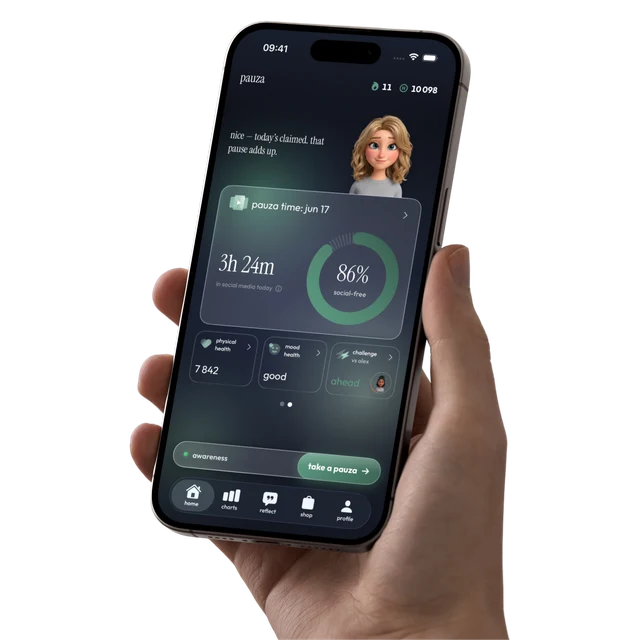
frequently asked questions
What are accountable phone goals?
Accountable phone goals are specific, measurable targets you set for your phone use, combined with systems for tracking and reviewing your progress. These goals help you stay intentional and honest about your screen time.
How do I track my screen time on iPhone?
Go to Settings > Screen Time on your iPhone. Turn on Screen Time to see daily and weekly reports, set App Limits, and schedule Downtime for focused periods.
Why do social challenges help with phone habits?
Friendly challenges or sharing goals with others creates a sense of accountability and support. Social incentives can make it more motivating to stick with your phone limits, especially over time.
What if I keep breaking my phone limits?
Review your patterns honestly—when and why are you exceeding your limits? Adjust your goals to be more realistic and try new strategies, like changing notification settings or adding a social accountability partner.
Is it normal to adjust my phone goals over time?
Yes, it’s normal and healthy. As your needs and routines change, update your phone goals to stay realistic and supportive. Small, steady adjustments are usually more sustainable than big, sudden changes.
Can I use rewards without making it feel like punishment?
Absolutely. Focus on positive, enjoyable activities as rewards—like a favorite walk or creative project. The idea is to make self-control satisfying, not punitive.
free tools
- screen time calculator — see what your daily hours add up to over a year
- average screen time statistics — how your usage compares to the latest data
- phone habit test — a 2-minute check of your phone habits