how to reverse brain rot and rebuild your attention span

To reverse brain rot and rebuild your attention span, you’ll need to address both the causes and the daily habits that undermine your focus. This guide offers specific, research-informed steps for regaining mental clarity—without hype or empty promises. You’ll find actionable techniques, from iPhone settings to mindset shifts, to help you reclaim your attention.
To reverse brain rot and rebuild your attention span, start by identifying your biggest digital distractions, set clear boundaries with phone features like Focus mode, and practice sustained attention through single-task activities. Gradually increase offline time to retrain your brain for deeper focus and healthier tech habits.
key takeaways
- Identify your most distracting triggers and change your notification settings.
- Small, consistent offline breaks can retrain your brain for better focus.
- Social media use averages over two hours daily—awareness is the first step to change.
- Peer accountability and friendly competition can make it easier to stick to new habits.
what is brain rot—and why is your attention slipping?
“Brain rot” is an informal term for the feeling of mental fog, restlessness, and short attention spans that can follow heavy digital use—especially endless scrolling and rapid-fire notifications. While it isn’t a clinical diagnosis, many people describe symptoms like trouble focusing, difficulty reading long texts, and a sense that their thinking has become fragmented.
The root causes are both technological and behavioral. Social media and app designers use notifications, infinite scroll, and algorithmic feeds to keep you engaged. Over time, these features can train your brain to crave novelty and rapid reward, making sustained focus feel harder.
On average, internet users spend 2 hours and 21 minutes on social media every day, according to DataReportal’s Digital 2025 report. This constant stimulation can crowd out activities that require deep, undivided attention, making it challenging to reverse brain rot without intentional change.
- Mental fog and restlessness are common signs of digital overload.
- App design features like notifications and infinite scroll undermine attention.
- Average daily social media use is over two hours, highlighting the scale of the issue.
pinpoint your personal attention drains
The first step in how to reverse brain rot is to identify where your time and attention actually go. Not everyone is distracted by the same apps or habits. Some people lose hours to social feeds, others to news or games.
On iPhone, open Settings > Screen Time to see a breakdown of your app and device usage. Look for patterns: Is it social media, messaging, or something else pulling you in? A screen time calculator makes those hours concrete and can be a powerful motivator for change.
Awareness is often the turning point. Once you see your biggest attention drains, you can set realistic priorities for what to cut back on first. Apps like Pauza can help you visualize your progress and make off-screen time more rewarding.
- Go to Settings > Screen Time on your iPhone.
- Review your most-used apps and total daily pickups.
- Note which apps trigger the most notifications or reflexive checking.
- Choose one or two main distractions to tackle first.

reset your phone’s defaults for fewer digital interruptions
Most phones are set up to maximize engagement, not focus. To rebuild your attention span, start by minimizing interruptions. On iPhone, go to Settings > Notifications and turn off non-essential alerts—especially from social media and news apps.
Set up Focus mode (Settings > Focus) to filter notifications during work or study hours. Customize allowed contacts and apps so only urgent messages get through. You can schedule Focus modes for specific times or locations, helping you carve out predictable distraction-free periods.
These changes might feel drastic at first, but even a few hours a day without constant pings can help your brain relearn how to sustain attention. You’ll notice more mental breathing room almost immediately.
train your brain with single-task attention exercises
Reversing brain rot isn’t just about blocking distractions—it’s about actively practicing focus. Start with short, single-task exercises. This could be reading a book for 10 minutes without checking your phone, or doing one activity (like cooking or drawing) with your device in another room.
Gradually increase the length of these sessions as your comfort with sustained attention grows. If you lose focus, gently bring your attention back to the task—don’t beat yourself up. The goal is to rebuild your mental stamina over time.
Some people find it helpful to use analog cues: set a kitchen timer, or leave your phone in a drawer. Others benefit from friendly accountability, such as setting up a group challenge to see who can go longest without mindless scrolling.
- Read a physical book or article for 10-20 minutes.
- Complete a simple craft, puzzle, or drawing task device-free.
- Practice mindful walking or eating—fully present, no screens.
- Try a Pomodoro timer: 25 minutes focused, 5 minutes break.
use social motivation and gentle competition
Making behavioral changes stick is easier with a social boost. Friendly competition can help you stay accountable and make progress feel more rewarding. For example, you might challenge a friend or partner to see who can spend less time on their phone in a week—the lowest screen time wins.
Apps like Pauza are designed to turn these goals into something tangible, letting you bet tokens (with no cash value) on your ability to stay off your phone. You can track streaks, see your stats, and invite friends into friendly bets without risking real money.
Even outside of apps, simply sharing your screen time data with someone you trust can make you more mindful of your habits. Social support helps transform what could feel like deprivation into something motivating and fun.
make offline time more rewarding and visible
To reverse brain rot for good, it’s critical to fill the time you reclaim with activities that feel genuinely enriching. This might be meeting a friend in person, learning a new skill, exercising, or exploring a hobby. When you make offline time enjoyable, you’re less likely to slip back into endless scrolling.
Track your offline achievements, no matter how small. Some people keep a notebook of device-free hours or list one thing they noticed or accomplished each day. On iPhone, you can review your daily and weekly screen time reductions for extra encouragement.
The key is to make progress visible—whether that’s a streak in an app, a calendar checkmark, or a personal note. Over time, you’ll notice clearer thinking and more energy for things that matter.
by the numbers
- The average internet user spends 2 hours and 21 minutes on social media every day.— DataReportal, Digital 2025
Ready to reclaim your focus? Try Pauza on your iPhone to turn time off your phone into something you can see, track, and celebrate.
Get Pauza on iPhone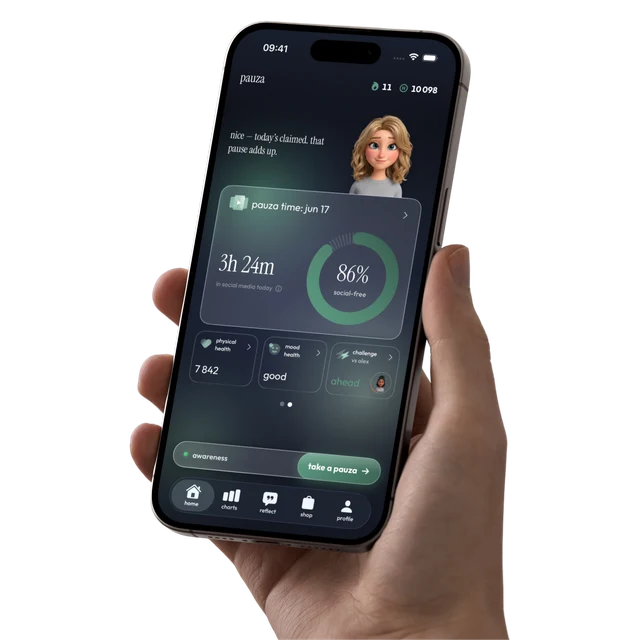
frequently asked questions
What are the first signs of brain rot from phone overuse?
Common signs include trouble focusing, mental fog, difficulty reading at length, and a restless urge to check your phone. You may also notice more frequent mindless scrolling or feeling overwhelmed by notifications.
How long does it take to rebuild attention span after reducing screen time?
Improvements can begin in a few days with consistent effort, but lasting changes to attention span often take weeks. Gradually increasing device-free activities will help your brain relearn focus and deeper engagement.
Does turning off notifications really help with focus?
Yes—reducing non-essential notifications removes frequent cues to check your device, making it easier to maintain attention. Try disabling most app alerts and using Focus mode for work or study blocks.
Are there any iPhone features that support rebuilding focus?
Absolutely. iPhone’s Screen Time lets you monitor usage, while Focus mode can block distractions for set periods. Customizing these settings is a practical first step toward better digital habits.
How can I stay motivated to spend less time on my phone?
Peer accountability, friendly challenges, and tracking your progress can make the process more engaging. Apps that reward offline time or let you compete with friends can boost motivation without relying on willpower alone.
free tools
- screen time calculator — see what your daily hours add up to over a year
- average screen time statistics — how your usage compares to the latest data
- phone habit test — a 2-minute check of your phone habits