12 settings that make your iPhone less addictive

This list shares 12 specific iPhone settings and techniques to help people make their iPhone less addictive. If you feel your phone's apps or notifications pull you in more than you'd like, these steps offer practical, honest ways to take back control. Each tip is concrete and easy to try, with no hype or empty promises.
To make iPhone less addictive, adjust settings like notifications, screen time limits, and display options. Features such as greyscale mode, app restrictions, and Do Not Disturb help reduce distractions and compulsive use, making it easier to stay focused and spend less time on your device.
key takeaways
- Turning off non-essential notifications can dramatically reduce urge-driven phone checks.
- Setting your iPhone display to greyscale makes apps and feeds less visually enticing.
- App limits and downtime help create clear boundaries for phone use.
- Using tools like Focus modes and social accountability can reinforce healthier habits.
turn off unneeded notifications
Constant pings and banners train your brain to check your phone, even for trivial reasons. Each interruption not only grabs your attention but can pull you into a longer session than you intended.
To cut down on this, review your notification settings and disable alerts for apps that don’t truly require your immediate attention. This is especially useful for social media, shopping, and news apps.
On your iPhone, go to Settings > Notifications. Tap each app and set ‘Allow Notifications’ to off for anything non-essential.
- Settings > Notifications > [App] > Allow Notifications: Off
- Prioritize only calls, messages, or critical alerts
switch your display to greyscale
Colorful icons and feeds are designed to grab your attention and keep you scrolling. Switching your display to greyscale removes much of this visual reward, making it less tempting to open and use addictive apps.
To set this up, go to Settings > Accessibility > Display & Text Size > Color Filters. Turn on Color Filters and select ‘Greyscale’.
If you want an easy toggle, add ‘Color Filters’ to your Accessibility Shortcut (Settings > Accessibility > Accessibility Shortcut).

set daily app limits
Many people are surprised by how much time they actually spend on certain apps. App Limits let you set a maximum daily usage for specific categories or apps, helping you notice and reduce overuse.
Go to Settings > Screen Time > App Limits. Add limits for social media, games, or any app that tends to eat your time.
You’ll get a reminder when you hit your limit, making it easier to pause and reflect on your use.
- Settings > Screen Time > App Limits > Add Limit
- Choose categories or individual apps and set your daily time allowance
schedule downtime hours
Downtime lets you block most apps and notifications during chosen hours—like evenings or before bed. This can create a clear boundary between phone time and personal time.
Set this up in Settings > Screen Time > Downtime. Pick your start and end times; only apps you specifically allow will be accessible.
For example, you might set downtime from 9pm to 7am to help wind down and sleep better.
use focus modes to filter distractions
Focus modes allow you to filter which people and apps can reach you depending on your activity—work, sleep, personal time, and more. You can customize these modes to silence non-urgent notifications or hide distracting app badges.
To start, go to Settings > Focus. Create or edit a mode, then choose allowed notifications, calls, and app screens.
This helps you stay present and less likely to drift into mindless scrolling.
hide addictive apps from your home screen
The easier an app is to access, the more likely you are to open it without thinking. Moving social media, games, or other time-sinks off your main screen can interrupt this habit loop.
Long-press any app icon and select ‘Remove from Home Screen’ (it will stay in the App Library). You can also group these apps into a folder and move it to the last page.
Out of sight, out of mind makes a real difference.
disable badge icons for distracting apps
Red notification badges on apps like Mail or Instagram act as visual pressure to check for updates. Disabling these badges reduces that itch to open the app just to clear the alert.
Go to Settings > Notifications > [App] and toggle off ‘Badges’.
This small change can significantly reduce unconscious app-checking.
set up ‘ask to buy’ or restrictions for yourself
You can use Apple’s parental controls on yourself to require approval before installing new apps or making in-app purchases. This puts a speed bump in front of impulsive downloads or spending.
In Settings > Screen Time > Content & Privacy Restrictions, enable restrictions and set up a passcode only you know.
This is particularly helpful for parents, but can also be a powerful tool for adults wanting to cut back.
turn off ‘raise to wake’ and lock your phone quickly
The 'raise to wake' feature lights up your screen every time you pick up your phone, making it easy to get sucked back in. Turning this off, and setting a short auto-lock timer, keeps your device dark and less inviting.
Go to Settings > Display & Brightness > Raise to Wake: Off. Then, in Settings > Display & Brightness > Auto-Lock, choose the shortest comfortable time (like 30 seconds).
Your phone will wake up less often, breaking the habit of checking it out of boredom.
track your screen time honestly
Awareness is the first step in changing a habit. Check your Screen Time dashboard regularly to see which apps use up your time. For those seeking extra motivation, apps like Pauza can help by rewarding you for time spent off social media, letting you build streaks and even challenge friends to reduce screen time.
Go to Settings > Screen Time to review your daily and weekly reports.
Seeing real numbers can motivate change in a way that vague goals can't.
- Settings > Screen Time > See All Activity
- Compare week-to-week trends for honest insight
use downtime as a social commitment
Social accountability can strengthen your resolve to use your phone less. With features that let you ‘bet’ a friend on who can rack up less screen time (no cash, just in-app tokens), you turn healthy habits into a friendly game.
Apps like Pauza offer this option, letting you and a friend compete for the lowest screen time each week. This shared challenge can help you stick to your boundaries and make changes stick.
Even outside of apps, sharing your goals or screen time reports with a partner or friend can keep you honest.
minimize suggested and personalized content
Personalized suggestions—like Siri Suggestions on your home screen, or widgets that surface trending stories—can tempt you into opening apps you weren’t even thinking about. Turning these off can reduce impulse use.
To disable Siri Suggestions, go to Settings > Siri & Search, and toggle off ‘Suggestions on Home Screen’, ‘Suggestions in Search’, and ‘Suggestions in Look Up’.
Less algorithmic nudging means fewer accidental rabbit holes.
by the numbers
- The average internet user spends 2 hours and 21 minutes on social media every day.— DataReportal, Digital 2025
Ready to try a gentler approach to screen time? Download Pauza on your iPhone to start building healthier digital habits today.
Get Pauza on iPhone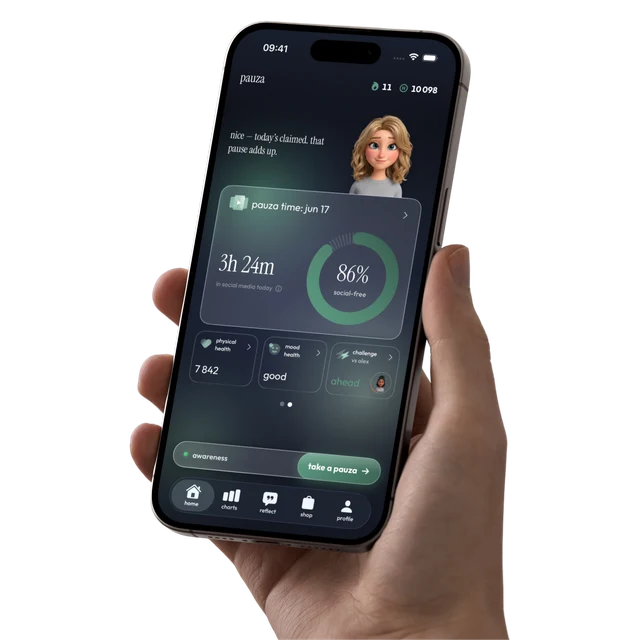
frequently asked questions
Will these settings make my iPhone less functional for work or emergencies?
Most settings can be customized to allow important calls, messages, or app notifications through. Review each tip and tailor settings to your specific needs, so you don’t miss urgent communication.
How do I know which apps are most distracting for me?
Check your Screen Time report in Settings > Screen Time. It lists your most-used apps and total time spent on each, helping you identify where to set limits or make changes.
Is using greyscale mode permanent or easy to toggle?
Greyscale can be toggled on and off in seconds. Adding it to your Accessibility Shortcut lets you switch back to color whenever needed.
Can I set different limits for weekdays and weekends?
Yes, when setting App Limits or Downtime, you can customize schedules for specific days to fit your routine.
How does social accountability help reduce phone use?
Friendly competition and shared goals make it easier to stick with new habits. Comparing screen time or challenging a friend can add motivation and make the process less isolating.
free tools
- screen time calculator — see what your daily hours add up to over a year
- average screen time statistics — how your usage compares to the latest data
- phone habit test — a 2-minute check of your phone habits