how to focus without reaching for your phone

To focus without reaching for your phone, you need to change both your environment and your habits. This means making distractions less accessible, understanding your triggers, and using simple tools to help you stay present. With small adjustments, it’s possible to get real work done without constant interruptions.
To focus without your phone, physically move your device out of reach, disable non-essential notifications, and set clear intentions for your task. Use built-in iPhone features like Downtime or Focus Mode to limit distractions, and create an environment that supports single-tasking for deeper concentration.
key takeaways
- Physical distance from your phone reduces the urge to check it.
- Customizing iPhone Focus and notification settings makes distractions less tempting.
- Replacing phone-checking habits with mindful pauses can retrain your attention.
- Apps like Pauza can support intentional breaks and gentle accountability.
why your phone pulls your attention
Phones are designed to capture and keep your attention. Every notification, vibration, or app icon is a cue to check in, often before you realize it. This isn’t a lack of willpower—it’s how these devices are built.
The constant stream of notifications and updates triggers dopamine, the brain’s reward chemical. This makes checking your phone feel urgent and satisfying in the short term, but it fragments your focus and makes it harder to sustain attention on more demanding tasks.
According to DataReportal, the typical social media user actively uses 6.5 different platforms each month. With so many sources competing for your attention, it’s no surprise that focus can feel elusive.
- Notifications and alerts interrupt deep work.
- Social apps use design tricks to keep you engaged.
- Habitual checking can happen without conscious thought.
what triggers the urge to check your phone
Understanding your personal triggers is the first step in learning how to focus without your phone. For many, boredom, stress, or even a momentary pause in a task can prompt a reflexive reach for their device.
Cues like a flash of your screen, a notification sound, or even just seeing your phone nearby can set off this automatic behavior. Sometimes, you might not even notice you’ve picked up your phone until several minutes have passed.
To break this cycle, start by identifying moments when you’re tempted to check your phone and what emotion or situation preceded it. Noting these triggers, even briefly, can help you anticipate them and plan a different response.

preparing your environment for better focus
Changing your environment is a powerful way to make phone distractions less likely. The simplest option is to physically place your phone out of sight and out of reach—such as in another room or a closed drawer. Studies show that even having your phone visible can reduce cognitive performance, so don’t underestimate this small step.
On your iPhone, take advantage of built-in settings like Focus Mode or Downtime. Go to Settings > Screen Time > Downtime to schedule periods when only selected apps and calls are allowed. For Focus, navigate to Settings > Focus, then create a custom focus profile that blocks social and entertainment apps during work or study hours.
You can also silence notifications by swiping down on your Control Center and enabling Do Not Disturb, or by setting notifications to ‘Deliver Quietly’ (Settings > Notifications). These tools help create a phone environment that respects your intention to focus.
- Move your phone to a different room or drawer.
- Set up Downtime under Settings > Screen Time.
- Customize Focus Mode profiles for different tasks.
- Silence non-essential notifications.
replacing phone-checking with mindful habits
Simply removing your phone isn’t enough if your mind is used to reaching for it at every pause. It helps to consciously replace that behavior with something else. For example, when you notice the urge to check your phone, pause and take a few deep breaths, stretch, or jot a quick note about what you’re working on.
These small mindful actions interrupt the automatic loop of distraction and retrain your attention. Over time, your brain learns to expect a different reward—like a moment of calm or a sense of progress—rather than a quick scroll.
Apps like Pauza can also help by providing positive feedback for time spent off your phone, turning your break into a small win instead of a lost moment.
using accountability and gentle competition
Making your phone habits visible to others can boost your commitment to focus. Share your intention to limit phone use with a friend, or set up a challenge together to see who can reduce screen time the most over a day or week.
Gentle competition can make the process more engaging. For iPhone users, several apps—including Pauza—let you create friendly bets with friends over who can spend the least time on their phone, tracking streaks and rewarding time away with in-app tokens. These tokens have no cash value, but the shared goal adds a layer of accountability.
If you prefer to go solo, consider journaling your progress or setting mini-rewards for meeting your own screen time targets each week. The key is to make your intention visible and trackable, not just a private wish.
- Share your goal with a friend or family member.
- Join a group challenge to reduce screen time.
- Use apps that reward focus and track streaks.
- Reflect on progress at the end of each day.
what to do when you slip up
Even with the best systems, everyone slips and checks their phone out of habit. Don’t judge yourself harshly—notice what led to the slip, and gently return to your task. The goal is progress, not perfection.
If you find yourself mindlessly scrolling, take a moment to close all open apps and put your phone away again. Try to identify if there was a particular stressor or trigger, and consider what you might do differently next time.
Remember, learning how to focus without your phone is an ongoing process. Each day gives you another chance to practice, reflect, and improve your ability to be present with what matters most.
by the numbers
- The typical social media user actively uses 6.5 different platforms each month.— DataReportal, Digital 2025
Ready to make focus easier? Try Pauza on your iPhone to turn time away from your phone into a rewarding, positive habit.
Get Pauza on iPhone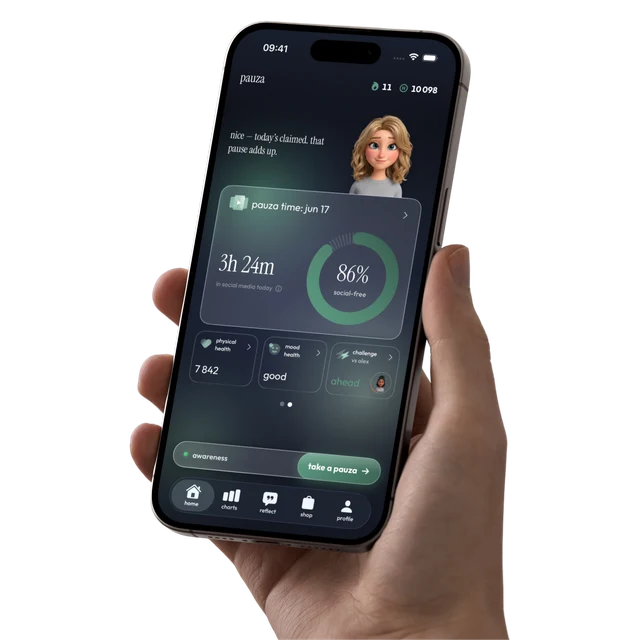
frequently asked questions
How do I stop checking my phone all the time?
Start by moving your phone out of reach and silencing notifications. Use built-in iPhone features like Focus Mode or Downtime, and replace the urge to check with a brief pause or mindful breath.
What iPhone settings help me focus?
Use Focus Mode (Settings > Focus) to silence notifications from selected apps, and schedule Downtime (Settings > Screen Time > Downtime) to block distracting apps during work or study periods.
Can apps actually help me use my phone less?
Yes, apps like Pauza can support you by rewarding off-phone time and making your goals visible. They can also add friendly accountability and help you track progress, but real change comes from your own intention.
What if I need my phone for work?
Set up custom Focus profiles to allow only essential work apps and silence the rest. Keep your phone face down or in another room when not actively needed.
How long does it take to build better focus?
Improving focus is a gradual process. Many people notice small changes in a week, but lasting habits may take several weeks of consistent effort. Be patient and track your progress.
Is it okay to take breaks from focusing?
Absolutely. Short, intentional breaks help refresh your attention and prevent burnout. Just be mindful not to default to mindless phone scrolling—choose a different restorative activity if possible.
free tools
- screen time calculator — see what your daily hours add up to over a year
- average screen time statistics — how your usage compares to the latest data
- phone habit test — a 2-minute check of your phone habits