how to dumb down your iPhone for less screen time

This list shows practical, non-obvious ways to dumb down your iPhone and cut your daily screen time. If you want your phone to be a tool, not a temptation, these steps are for you. Each item targets a different cause of distraction with a concrete, specific action.
To dumb down your iPhone for less screen time, remove non-essential apps, disable notifications, simplify your home screen, limit access to social media, and use built-in restrictions or focus modes. These steps help reduce distractions and make your device less compelling, supporting healthier phone habits.
key takeaways
- Hide, delete, or restrict access to distracting apps for instant focus.
- Turn off non-essential notifications to silence interruptions.
- Use greyscale mode and minimal home screens to make your phone less engaging.
- Set up strict time limits and leverage accountability tools for lasting change.
delete or hide distracting apps
The fastest way to dumb down your iPhone is to remove the apps that trigger automatic, endless checking—especially social media, games, and news feeds. Out of sight really can mean out of mind.
Delete any apps you don’t truly need. For essential apps you can’t delete (like Safari or Mail), move them into a hard-to-reach folder on the last home screen. For social media, consider logging out after each use. Even a few days without these triggers can lower your urge to pick up your phone.
Apps like Pauza can help you notice when you’re actually away from those time-draining apps and reward you for it, without blocking access completely.
- Tap and hold an app icon, select 'Remove App', then 'Delete App' or 'Remove from Home Screen'.
- Group must-keep apps into a folder named something neutral (like 'Tools') and move it to the last page.
turn off non-essential notifications
Notifications are engineered to grab your attention and disrupt focus. According to DataReportal, the average internet user spends 2 hours and 21 minutes on social media every day—much of it prompted by relentless pings.
Visit Settings > Notifications and review each app. Disable notifications for anything that isn't urgent or essential—think social, games, and shopping. Leave only calls, texts, and reminders you genuinely need.
This single change can dramatically cut your daily interruptions and help you reclaim your attention.
- Go to Settings > Notifications.
- Select each app and switch off 'Allow Notifications' as needed.
enable greyscale mode
Colorful icons and images make your iPhone visually addictive. Switching to greyscale mode strips away those cues, making your phone less appealing and less likely to draw you back in.
To enable, go to Settings > Accessibility > Display & Text Size > Color Filters, then toggle on 'Color Filters' and select 'Greyscale'. For easy toggling, set up an Accessibility Shortcut.
This subtle shift can reduce mindless scrolling, especially on social apps.
simplify your home screen
A cluttered home screen tempts you to open distracting apps out of habit. By keeping only essential tools—like Phone, Messages, and Calendar—on your first page, you’ll create a deliberate, friction-filled path to everything else.
Move all non-essentials to the App Library or hidden pages. Customizing your home screen this way can make checking your phone more purposeful.
This also pairs well with a screen time calculator to make your usage data more tangible.
set strict screen time limits
Screen Time settings let you enforce hard limits on app categories or specific apps. This is a direct way to dumb down your iPhone by creating speedbumps for your worst digital habits.
Go to Settings > Screen Time > App Limits. Set daily limits for social media, entertainment, or any app that eats your time. Consider using a passcode that only a trusted friend or family member knows.
- Navigate to Settings > Screen Time.
- Set App Limits for your most-used or most-distracting apps.
use focus modes for specific times
Focus modes let you pre-set which apps and people can reach you during certain times—like work, study, or sleep. By activating a custom Focus, you can block nearly all distractions automatically.
To configure: Go to Settings > Focus, create a new mode, and select only the necessary people and apps allowed during that time.
This makes your iPhone support your intentions instead of pulling you off track.
remove autofill and quick search shortcuts
Autofill and Spotlight search make it too easy to jump into entertainment or information rabbit holes. Disabling these features can help you pause before acting on impulse.
To limit autofill, go to Settings > Safari > AutoFill and turn off options you don’t need. For Spotlight, remove unnecessary app suggestions in Settings > Siri & Search by toggling off 'Show in Search' for distracting apps.
This tiny friction point can prevent dozens of mindless pickups each day.
find accountability with friends
Changing habits is easier with social support. Challenge a friend to a screen time bet: whoever has the lowest weekly total wins. This makes your goal public and adds a layer of fun, not pressure.
Apps like Pauza let you set up friendly bets without cash or gambling, track streaks, and reward time off your phone together. This keeps you motivated and honest about your progress.
Compare your results to the average screen time to see real-world progress.
by the numbers
- The average internet user spends 2 hours and 21 minutes on social media every day.— DataReportal, Digital 2025
Ready to make your iPhone work for you, not against you? Try Pauza for iPhone and start rewarding your time away from the screen.
Get Pauza on iPhone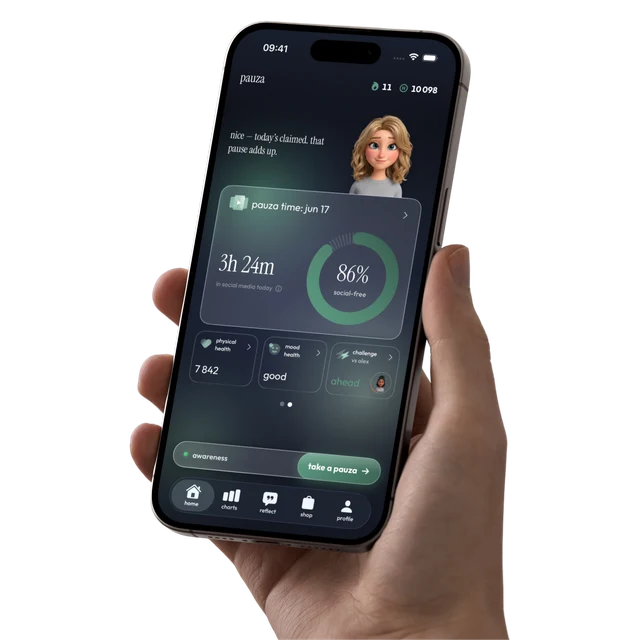
frequently asked questions
What does it mean to 'dumb down' an iPhone?
It means making your iPhone less distracting and less addictive by removing or restricting features, apps, and notifications that encourage mindless use. The goal is to turn your device into a tool, not a source of constant entertainment.
Will these steps affect important communications or emergencies?
If you keep calls and texts enabled, you’ll still receive urgent messages. Focus modes and notification settings can be customized to allow contacts or apps you need in emergencies.
Do I need to delete all my apps to reduce screen time?
No, you can hide, move, or restrict non-essential apps instead of deleting them. The important thing is to break the automatic habit of checking them.
Can I reverse these changes if I find them too restrictive?
Absolutely. All these steps are reversible in your iPhone’s settings, so you can adjust them anytime if your needs change.
Is there a way to track how much my screen time improves?
Yes, you can use your iPhone’s Screen Time reports to monitor daily and weekly usage. Apps that reward you for time away, like Pauza, can also help track your progress and keep you motivated.
free tools
- screen time calculator — see what your daily hours add up to over a year
- average screen time statistics — how your usage compares to the latest data
- phone habit test — a 2-minute check of your phone habits