how to bypass screen time — and why your own workarounds keep winning

Yes, it is possible to bypass Screen Time restrictions on iPhone, but the methods are often simple and well-known. However, understanding why these workarounds are so common reveals more about our habits than about technology. Let’s look at how these limits work, what the evidence says, and what actually helps.
To bypass Screen Time on iPhone, users often change the device clock, reset or guess the passcode, use Siri, or reinstall blocked apps. These methods exploit predictable loopholes in the system, making Screen Time limits easy to override for those determined to do so.
key takeaways
- Screen Time limits are easy to bypass using well-known tricks.
- Most workarounds rely on passcode resets, device settings, or loopholes in app restrictions.
- Evidence suggests that willpower, not just technical controls, is key to lasting screen time change.
- Tools like Pauza offer alternative ways to motivate time away from your phone.
what does it mean to bypass screen time?
Bypassing Screen Time means getting around the restrictions set by Apple's built-in digital wellbeing tool on iPhone. Screen Time lets you set app limits, downtime, and content restrictions, often protected by a passcode. However, users often look for ways to override these limits — either temporarily or permanently.
Common bypasses include changing system settings, guessing or resetting the passcode, or finding loopholes in how app blocking works. While intended for self-control or parental guidance, Screen Time's technical and psychological boundaries are not absolute.
Apps like Pauza approach digital balance differently, rewarding you for time away from your phone rather than only blocking access.
how screen time controls actually work
Screen Time works by monitoring device usage and applying limits based on your preferences. You can set daily time limits for specific apps, schedule downtime, and restrict content or purchases. These controls are managed by a passcode (if set), which is meant to prevent quick bypassing.
When a limit is reached, the app icon grays out and a warning appears. You can override the limit with a passcode — or, if you set it yourself, by simply entering it. For parental controls, the system relies on the child not knowing the passcode or device credentials.
However, Screen Time is fundamentally a software barrier. If the passcode is weak, forgotten, or resettable, a determined user can usually circumvent it.
- App limits stop apps after a set time, but can be ignored with the passcode.
- Downtime schedules 'off hours' but can be overridden.
- Content restrictions limit mature content, but do not block all forms of access.

common ways people bypass screen time limits
Most workarounds for how to bypass Screen Time are simple and widely shared online. Teens and adults alike find these gaps, often within days of setting up restrictions.
Popular methods include changing the device date and time (to reset limits), using Siri to open apps, deleting and reinstalling blocked apps, or even resetting the whole device. If someone knows the Screen Time passcode — or if it's easy to guess — limits become trivial to remove.
Children, in particular, often share these tricks with each other. According to Pew Research Center, 95% of U.S. teens have access to a smartphone, making these methods relevant for many households.
- Change device date/time settings to reset app limits.
- Use Siri or search to access blocked apps.
- Delete and reinstall restricted apps.
- Guess or reset the Screen Time passcode.
- Factory reset the device (loses data, but clears limits).
what the evidence supports — and what it doesn’t
Research on digital wellbeing tools shows mixed results. While Screen Time and similar controls can reduce usage in the short term, studies suggest most people find ways around them if motivated to do so.
Willpower, social support, and intrinsic motivation seem to matter more than technical barriers alone. For example, the average internet user spends 2 hours and 21 minutes on social media every day (DataReportal, Digital 2025). Compare that to the average screen time you see in your own device settings or with a screen time calculator.
No tool can fully override human ingenuity and desire. That’s why digital wellbeing apps like Pauza focus on rewarding behavior change, rather than only relying on restrictions.
practical steps to manage screen time (beyond bypassing)
If you’re trying to set healthy boundaries, relying on technical controls alone is rarely enough. Here are practical steps to support your goals, even if you know how to bypass Screen Time:
First, set a Screen Time passcode that only a trusted person knows (not yourself). Next, enable app limits and downtime — but add accountability by sharing your goals with a friend or family member. Consider apps that go beyond blocking, such as those that reward real time away from your phone or let you challenge friends in a supportive way.
For a more active approach, try keeping your phone out of reach during work or meals, disabling non-essential notifications, and reviewing your weekly usage honestly. Pauza, for example, turns every minute away from social media into tokens, streaks, and friendly competition — making it easier to stick with your intentions over time.
- Set a unique Screen Time passcode managed by someone else.
- Use a screen time calculator to track real habits.
- Try accountability through app-based challenges or with friends.
- Physically separate your device during key moments.
- Review and adjust your limits regularly.
myths and misunderstandings about screen time controls
A common myth is that Screen Time offers foolproof protection against overuse. In reality, most technical controls can be bypassed by anyone with enough motivation or know-how.
Another misunderstanding is that digital wellbeing is purely about blocking access. In fact, research suggests that positive reinforcement — such as rewards or social accountability — is more likely to sustain change.
Finally, it’s easy to blame yourself for failing to stick to digital limits. Remember, the system is designed to be easy to override, so seeking out new strategies and tools is not a sign of personal failure.
by the numbers
- The average internet user spends 2 hours and 21 minutes on social media every day.— DataReportal, Digital 2025
- 95% of U.S. teens have access to a smartphone.— Pew Research Center, 2024
Ready to try a different approach? Download Pauza for iPhone and discover new ways to spend more time off your phone — no blocking required.
Get Pauza on iPhone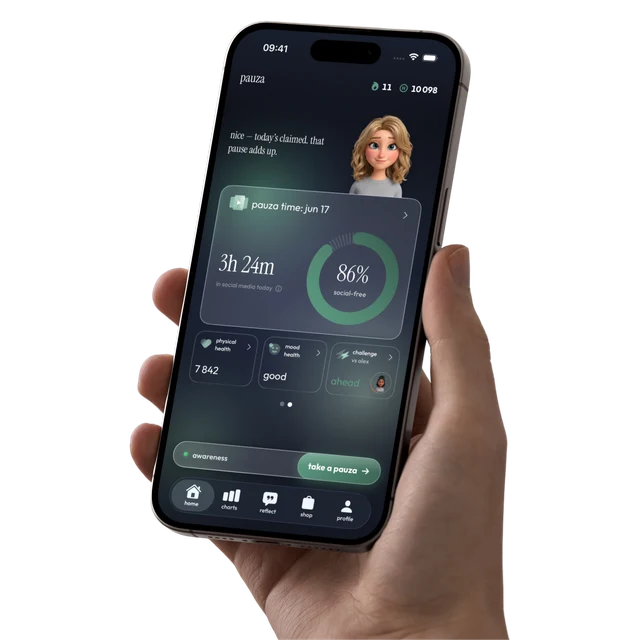
frequently asked questions
Can you really bypass Screen Time on iPhone?
Yes, most users can bypass Screen Time using device settings, passcode resets, or known loopholes. These methods are widely discussed online and are not technically difficult.
What is the most common Screen Time bypass method?
Changing the device’s date and time, guessing or resetting the passcode, and deleting/reinstalling apps are among the most common and effective workarounds.
Does Screen Time work for parental controls?
Screen Time can help, but it is not foolproof. If a child learns the passcode or finds a workaround, they can override the limits. Ongoing conversation and trust are important.
Are there apps that can’t be blocked by Screen Time?
Some system apps may not be fully blockable, and certain third-party apps may slip through if not included in your limits. Always check your app list when setting restrictions.
What’s more effective than blocking apps?
Combining technical controls with social support, rewards for healthy habits, and self-awareness is more effective than blocking alone. Apps like Pauza offer new approaches focused on positive motivation.
Can bypassing Screen Time affect my device or data?
Most bypasses do not harm your device, but factory resets will erase all data. It’s best to use less drastic methods and focus on building sustainable habits.
free tools
- screen time calculator — see what your daily hours add up to over a year
- average screen time statistics — how your usage compares to the latest data
- phone habit test — a 2-minute check of your phone habits