do app blockers actually work? an honest look

The most common misconception about app blockers is that installing one will instantly fix your screen time habits. In reality, their effectiveness depends on how you use them—and what you expect from them. Let’s take a clear-eyed look at what app blockers can and can’t do, and share practical advice for building better digital habits.
App blockers can help reduce screen time by limiting access to distracting apps, but their effectiveness depends on user motivation, app design, and personal follow-through. They work best as part of broader strategies—including self-awareness and mindful goal setting—rather than as a standalone solution.
key takeaways
- App blockers aren’t a magic fix—they help but need your active participation.
- Motivation and self-awareness matter as much as restrictions.
- Combining blockers with mindful strategies makes lasting change more likely.
- Tracking your actual usage with tools like a screen time calculator can make patterns clear.
myth: app blockers alone can solve screen time problems
Many people believe that simply installing an app blocker will dramatically cut their screen time. While these tools do restrict access to certain apps or websites, they don’t address the underlying reasons for excessive use—like habit, boredom, or stress.
Research and real-world experience show that blockers are most effective when combined with personal motivation and reflection. If you’re determined to bypass a restriction, it’s usually possible. On iPhone, for example, it’s common to override Screen Time limits with a few taps.
Instead of relying solely on blockers, use them as part of a broader approach: set clear intentions, notice your triggers, and reflect on why you reach for your phone. Apps like Pauza add a layer of self-awareness and gentle accountability, rewarding you for time off your device rather than just blocking apps.
- Blockers are tools, not solutions.
- Combine technical controls with mindful habits.
- Regularly review and adjust your approach.
myth: more willpower fixes it
It’s a common belief that overcoming phone overuse is just about having more willpower. But willpower is limited, especially when apps are designed to capture your attention. Social media and entertainment platforms often use notifications, endless scroll, and variable rewards to keep you engaged.
According to DataReportal, the average internet user spends 2 hours and 21 minutes on social media every day. This isn’t just a personal failing—it’s the result of intentional design and cultural norms.
Instead of relying on willpower alone, use external supports: schedule device-free times, rearrange your home screen to hide tempting apps, and use features like Downtime or Focus mode on iPhone. Tools like a screen time calculator make those hours concrete, helping you spot trends and set realistic goals.
- Willpower is finite—don't rely on it alone.
- Design your environment for less friction.
- Track your real usage to notice patterns.

myth: app blockers are just for kids or extreme cases
Some adults dismiss app blockers as parenting tools or think they're only for people with serious screen time problems. In reality, digital distraction affects people of all ages and backgrounds. Nearly half of U.S. teens (46%) say they're online almost constantly, but adults are not immune—as shown by the average of 6 hours and 38 minutes spent online each day.
Even if you don’t consider your habits extreme, small changes can reclaim meaningful time. App blockers can serve as gentle reminders, not punishments, and can help anyone trying to be more intentional with their attention.
Try using blockers for focused work sessions or to carve out device-free evenings. Remember, it’s about experimenting to find what works for you—not about one-size-fits-all solutions.
- Digital distractions affect all age groups.
- Blockers can be adapted to individual needs.
- Start small—test features like Focus or Downtime.
myth: app blockers are foolproof and can’t be bypassed
It’s tempting to think that technical barriers are unbreakable. In reality, most app blockers—including built-in iOS Screen Time—can be bypassed with enough determination. Common workarounds include changing device settings, reinstalling apps, or simply disabling the blocker.
This doesn’t mean blockers are useless. Instead, recognize their limitations and use them as prompts for reflection. If you notice yourself constantly finding ways around your blockers, it’s worth asking why—and considering tweaks to your strategy.
Pairing blockers with accountability features or social commitments can help. For example, Pauza lets you build streaks for time away from your phone and even bet a friend on who can scroll less, turning the challenge into a shared experience.
- Blockers can be circumvented—be honest with yourself.
- Notice your bypass patterns and adjust.
- Add accountability by involving a friend or tracking streaks.
myth: if blockers don't work instantly, they're not worth it
People sometimes expect instant results from app blockers, and give up if their habits don’t change overnight. But like any behavioral change, reducing screen time is a gradual process. Quick fixes rarely stick, and it’s normal for progress to come in fits and starts.
Instead of perfection, aim for small, sustainable improvements. Review your device’s Screen Time data weekly (Settings > Screen Time > See All Activity on iPhone) to see what’s working and where you’re slipping.
Adjust your settings as you go. Experiment with different blockers, time limits, or challenges. Over time, these incremental changes add up.
myth: app blockers are all the same
Not all app blockers work the same way. Some simply hide or password-protect apps, while others track your time, reward you for staying offline, or add a social element. Your needs might change over time, so it’s worth trying different approaches.
For example, Pauza takes a positive approach: every minute you spend away from distracting apps turns into in-app tokens, and you can compete with friends to see who has the lowest screen time. Unlike some tools, your usage data stays on your device, and there’s a free core version if you want to try it out.
Explore the features of various blockers and see which best fits your habits and goals. The right tool is the one you’ll actually use.
by the numbers
- The average internet user spends 2 hours and 21 minutes on social media every day.— DataReportal, Digital 2025
- People spend an average of 6 hours and 38 minutes online across all devices each day.— DataReportal, Digital 2025
- Nearly half of U.S. teens (46%) say they are online almost constantly — roughly double the share a decade ago.— Pew Research Center, 2024
Ready to try a positive, practical approach to your screen time? Download Pauza on iPhone and see how small changes can make a real difference.
Get Pauza on iPhone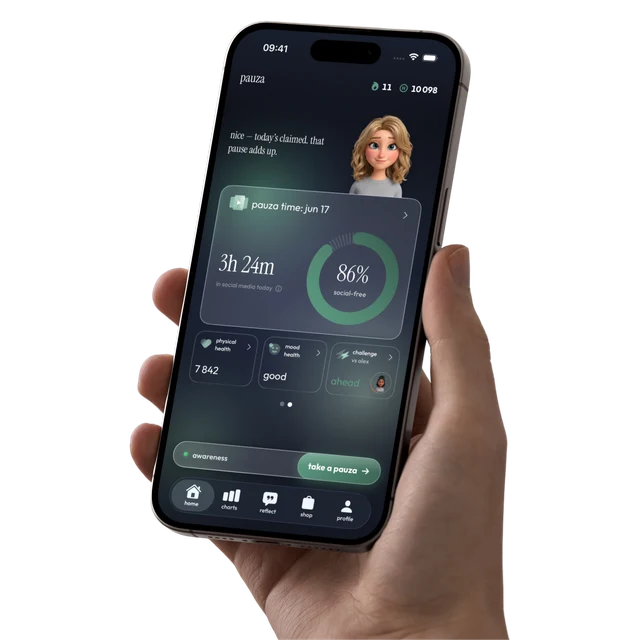
frequently asked questions
Can app blockers reduce my screen time?
App blockers can help reduce screen time by making it harder to access distracting apps, but their impact depends on your motivation and consistent use. Combining them with self-reflection and other strategies increases effectiveness.
Are app blockers safe to use?
Yes, most reputable app blockers are safe, especially those from the official App Store. Always check user reviews and privacy policies to ensure your data is handled responsibly.
What’s the best way to set up an app blocker on iPhone?
Go to Settings > Screen Time > App Limits to set daily limits for specific apps, or use Downtime to schedule device-free hours. Review and adjust these settings regularly for best results.
What should I do if I keep bypassing my app blocker?
Notice when and why you’re overriding limits—this can reveal triggers or patterns. Try adding accountability, like tracking streaks or inviting a friend to join you in a screen time challenge.
Can app blockers help with focus at work or study?
Yes, using app blockers during work or study sessions can reduce distractions. Combine them with Focus mode (Settings > Focus) and scheduled breaks to support concentration.
Are there alternatives to app blockers?
Yes, alternatives include device-free rituals, rearranging your home screen, turning off notifications, or using positive reinforcement apps that reward time away from your phone.
free tools
- screen time calculator — see what your daily hours add up to over a year
- average screen time statistics — how your usage compares to the latest data
- phone habit test — a 2-minute check of your phone habits