the digital detox challenge: a 7-day version people finish

A digital detox challenge should feel doable, not overwhelming. The most effective 7-day approach isn’t about quitting cold turkey, but making small, specific changes you can maintain. Expect a mix of gentle restrictions, mindful swaps, and real-life tests—without unrealistic promises or guilt.
A 7-day digital detox challenge is a structured, week-long effort to reduce unnecessary screen time by setting clear daily goals, adjusting device settings, and replacing habitual phone use with offline activities. It focuses on realistic, sustainable steps that help you regain control of your attention and tech habits.
key takeaways
- A 7-day digital detox works best when you plan for real-life triggers and challenges.
- Gradual, targeted changes are more sustainable than quitting all screen use at once.
- Using built-in iPhone tools and honest tracking helps you understand and reduce your screen time.
- Social support and small, non-monetary rewards can boost motivation and completion rates.
why most digital detoxes fail (and how to avoid it)
Many digital detox challenges disappoint because they set unrealistic rules—like banning all screens for a week. Life doesn’t pause: work, navigation, and connection often require our devices. Instead of strict avoidance, focus on identifying the most draining or impulsive uses of your phone.
Common reasons people quit digital detox challenges include lack of planning, unclear goals, and all-or-nothing thinking. Expecting perfection usually leads to frustration and an early end. A more sustainable approach is to target specific triggers and build in flexibility.
If you’ve tried before and stopped after a day or two, you’re not alone. Lasting change comes from understanding your own habits and designing a detox that fits your real schedule. Apps like Pauza can help make progress visible and rewarding, but even simple changes can be powerful.
- Unclear or rigid rules
- No plan for essential device use
- Ignoring personal screen time triggers
- Trying to quit everything at once
day 1: take inventory—your real screen time baseline
The first step in any digital detox challenge is to measure—not guess—your starting point. On iPhone, go to Settings > Screen Time > See All Activity. Look for your daily average and the apps that take the most time.
According to DataReportal, the average internet user spends 2 hours and 21 minutes on social media every day. Compare that to your own numbers. A screen time calculator makes those hours concrete, helping you set realistic goals for the week ahead.
Don’t skip this step. Knowing your baseline creates a sense of progress, especially when you track changes over the next seven days. Save a screenshot or write down your average to measure against later.
- Open your iPhone Settings
- Tap 'Screen Time', then 'See All Activity'
- Note your daily average and top apps
- Record this info for later comparison

days 2–3: redesign your environment, not just your willpower
Temptation is everywhere, and willpower alone rarely wins. Make your environment work for you. Move social media apps off your home screen or into a folder named 'Later'. Turn off all non-essential notifications: Settings > Notifications > turn off for apps you don’t need alerts from.
Physical changes matter too. Charge your phone outside the bedroom or in a different room overnight. Use grayscale mode (Settings > Accessibility > Display & Text Size > Color Filters) to make your device less visually stimulating. Small tweaks can interrupt habitual scrolling.
Remember, the goal isn’t to make your phone unusable, but to give yourself friction at the points where you tend to lose time. These environmental nudges add up over the week, especially when combined with honest self-reflection.
- Move distracting apps off your home screen
- Disable non-essential notifications
- Charge your device outside your bedroom
- Try grayscale mode for a less enticing display
days 4–5: swap, don’t just stop—finding offline alternatives
Simply removing screens can leave boredom and restlessness in their place. The most successful digital detox challenges include planned, enjoyable alternatives. Make a list of easy, low-pressure activities you can do instead of reaching for your phone. Think: reading a short article, taking a walk, cooking a new recipe, or calling a friend.
Pair these swaps with your known trigger times—like after dinner or during commuting. If you use your phone to fill awkward moments, try carrying a small book or notebook. Swapping, not just stopping, helps you stay engaged and reduces the draw of habitual scrolling.
Some people find that small social bets make these swaps more fun. For example, in Pauza, you can challenge a friend to a 'lowest screen time wins' contest, where tokens (not cash) go to the winner. Friendly competition can turn the week into a shared experiment.
day 6: handle the unexpected—real-life tests and setbacks
No detox goes perfectly. You might need your phone for work, navigation, or a family emergency. The real challenge is learning to pause and notice when you’re using your device intentionally versus out of habit.
If you slip and fall back into old patterns, avoid all-or-nothing thinking. Reflect on what triggered the lapse: Was it stress, boredom, or social pressure? Adjust your plan for tomorrow, not next week.
A digital detox is about progress, not perfection. Celebrate small wins, like noticing you reached for your phone but chose an alternative instead. These moments show your awareness is growing, which is the real foundation for lasting change.
day 7: review, reward, and set a next step
On the final day, compare your new screen time numbers to your starting point. Did your daily average change? Which apps saw the biggest drops? Use honest data, not guesswork. Even a small reduction is meaningful.
Non-monetary rewards help reinforce your effort. Treat yourself to a favorite meal, share your results with a friend, or enjoy an extra hour offline. Apps like Pauza can make this process more engaging by rewarding you with in-app tokens for time spent off social media, allowing you to track streaks and challenge friends.
Decide what you want to keep or tweak moving forward. Maybe you’ll keep charging your phone outside the bedroom, or schedule weekly mini-detoxes. The key is to choose one next step that feels both useful and sustainable for your routine. When you choose what to carry forward, size matters more than ambition: Mini Loops makes a good case for how small a new habit should be—small enough to do on your worst day, often just a minute or two.
- Check your new average screen time in Settings
- Note your biggest changes and what worked
- Choose a reward and plan a next step to sustain progress
by the numbers
- The average internet user spends 2 hours and 21 minutes on social media every day.— DataReportal, Digital 2025
Ready to try your own 7-day digital detox? Download Pauza for iPhone to track your progress, challenge friends, and make every minute off social media count.
Get Pauza on iPhone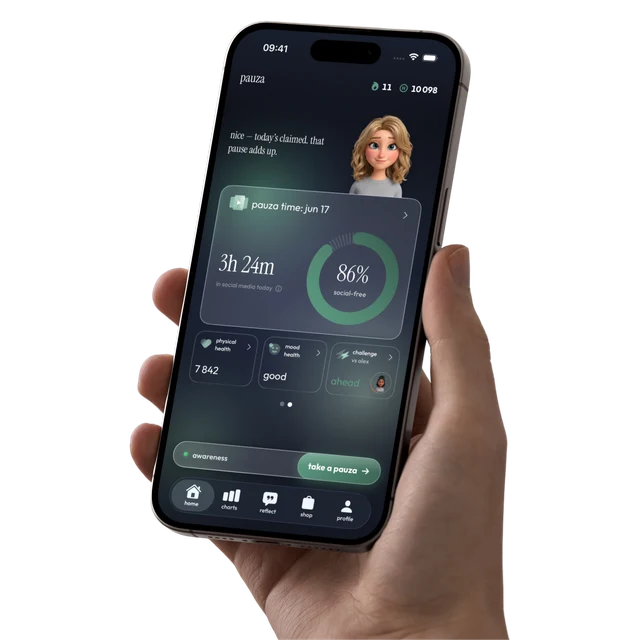
frequently asked questions
What is a digital detox challenge?
It's a structured, time-limited effort—often a week—to intentionally reduce unnecessary screen time through practical changes and mindful habits.
Do I have to quit all phone use during a detox?
No. Most effective detoxes focus on limiting specific apps or times, not eliminating essential communication or work tasks.
What if I need my phone for work or emergencies?
Use your phone as needed for essential tasks. The goal is to reduce mindless or impulsive use, not cut off important connections.
How can I stay motivated for a full 7 days?
Set clear, achievable goals and involve a friend for accountability. Small non-monetary rewards and visible progress can help you stick with it.
What tools can help me track my progress?
iPhone's Screen Time feature is built-in and easy to use. Apps like Pauza add extra motivation by letting you earn virtual tokens for time off social media.
Is a digital detox safe for everyone?
For most people, yes—but if you rely on devices for health, accessibility, or urgent communication, adjust your plan to fit your needs.
free tools
- screen time calculator — see what your daily hours add up to over a year
- average screen time statistics — how your usage compares to the latest data
- phone habit test — a 2-minute check of your phone habits