the best way to limit social media without deleting it

The best way to limit social media without deleting it is to combine iPhone’s built-in controls with small, specific changes to your habits—rather than rely on willpower alone. You don’t need to wipe your accounts to regain balance; real progress comes from understanding triggers, setting up friction, and using tools that reward your time offline. This guide breaks down proven, realistic steps that work even if you’ve tried (and failed) with strict app blocks before.
The best way to limit social media without deleting it is to use your phone’s built-in screen time controls, add small obstacles like moving apps off your home screen, and build new micro-habits that interrupt automatic scrolling, so you reduce usage gradually while keeping the features you actually need.
key takeaways
- Combine iPhone’s Screen Time settings with habit tweaks for more lasting results.
- Small changes—like moving apps or adding steps to open them—reduce mindless scrolling.
- Tools such as Pauza can motivate you to spend more time off social media, without deleting anything.
- It's normal to slip up; the key is to reset quickly, not aim for perfection.
why deleting isn’t the only (or best) answer
Deleting social media apps can seem like the fastest solution, but it rarely addresses why we reach for them in the first place. For most people, these platforms are woven into daily communication, news, and even work. Removing them may trigger FOMO or simply lead to reinstalling the apps later—sometimes with even less control than before.
Limiting social media instead of deleting it allows you to keep the useful parts (like messaging or event updates) while gradually reducing the mindless scroll. According to DataReportal, the average internet user spends 2 hours and 21 minutes on social media every day. Going cold turkey isn’t always realistic, and that’s okay.
A more effective approach is to make social media less available at moments of boredom or stress. This way, you can keep your connections and hobbies, but on your own terms—without feeling like you’re missing out or setting yourself up to fail.
- Keeps important connections and updates accessible.
- Prevents the cycle of uninstalling and reinstalling.
- Reduces feelings of deprivation or missing out.
find your personal triggers and routines
Most social media use is automatic. You reach for your phone during idle moments, waiting in line, or even when you’re supposed to be focused elsewhere. The key to lasting change is spotting your own patterns—the times, moods, or locations that make scrolling irresistible.
Start by noticing when and why you open Instagram, TikTok, or other apps. Is it when you’re bored at night? Stressed after work? Make a quick note for a few days. You’ll likely see a pattern emerge, and that’s where meaningful change can start.
Once you know your triggers, you can interrupt the cycle with small tweaks: placing your phone out of reach in certain rooms, or replacing the urge to check with a different action, like stretching or reading a page of a book.

use iphone settings to add friction (not just limits)
iPhone offers more than just app block timers. The best results come from adding friction—small hurdles that make it less convenient to open social media without banning yourself outright.
Try moving social media apps off your home screen, so you have to search for them. Go to Settings > Screen Time > App Limits to set daily caps for specific apps, but set the limits slightly above your current average, then lower them each week. This gentle approach is less likely to backfire than an all-or-nothing block.
You can also use Downtime (Settings > Screen Time > Downtime) to schedule app pauses during certain hours, or turn on Greyscale (Settings > Accessibility > Display & Text Size > Color Filters) to make apps less visually tempting. Each of these steps slows down the impulse and gives you a moment to reconsider.
- Move social apps into folders or off the main screen.
- Set specific App Limits in Screen Time.
- Schedule Downtime for focus hours.
- Turn on Greyscale to reduce app appeal.
try micro-habits that break the scroll
Big, sweeping changes are hard to maintain. Instead, focus on micro-habits—tiny actions that gradually rewire your relationship with social media. For example, before opening an app, pause and take a deep breath, or ask yourself what you actually hope to get from checking in.
Physical reminders can help: Keep a sticky note on your phone with a question like, 'Do I really want to open this?' Or, place your charger across the room so you’re less likely to scroll in bed.
Apps like Pauza encourage you to put your phone down by rewarding real-world time spent off-screen. This kind of positive reinforcement helps you notice—and celebrate—even small wins.
bring friends into the process—for accountability, not pressure
You’re much more likely to stick to new habits if someone else is involved. Sharing your goal to limit social media with a friend or family member can make the process less isolating and more sustainable.
Ask a friend to join you in a friendly challenge, like seeing who can go the longest without checking Instagram after dinner. In Pauza, for example, you can bet a friend on who keeps their screen time lower—winner takes the in-app token pot. This type of accountability is about encouragement, not shame.
If you slip up, having a buddy helps you reset quickly. No one is perfect, and the point isn’t to never scroll again—it’s to get a little better, together.
- Share your goal with a supportive person.
- Create a low-stakes challenge or game.
- Celebrate progress, not perfection.
reset expectations: progress, not perfection
Limiting social media is not about never using it again. It’s about regaining a sense of choice—using these platforms intentionally, rather than out of habit. There will be days when you scroll more than you’d hoped, and that’s normal.
If you slip up, avoid the trap of all-or-nothing thinking. Instead, reset your limits for the next day, or adjust your routines based on what you’ve learned. The average internet user spends more than two hours daily on social media; even a small reduction is meaningful.
Remember, the tools and habits you build—like Screen Time settings, micro-habits, and support from friends—are there to help you keep moving forward. Try Pauza on your iPhone for an extra nudge: it turns every minute away from social media into tokens and streaks, making small wins visible and motivating.
by the numbers
- The average internet user spends 2 hours and 21 minutes on social media every day.— DataReportal, Digital 2025
Ready to make social media work for you, not the other way around? Try Pauza on your iPhone to start building healthier digital habits—one minute at a time.
Get Pauza on iPhone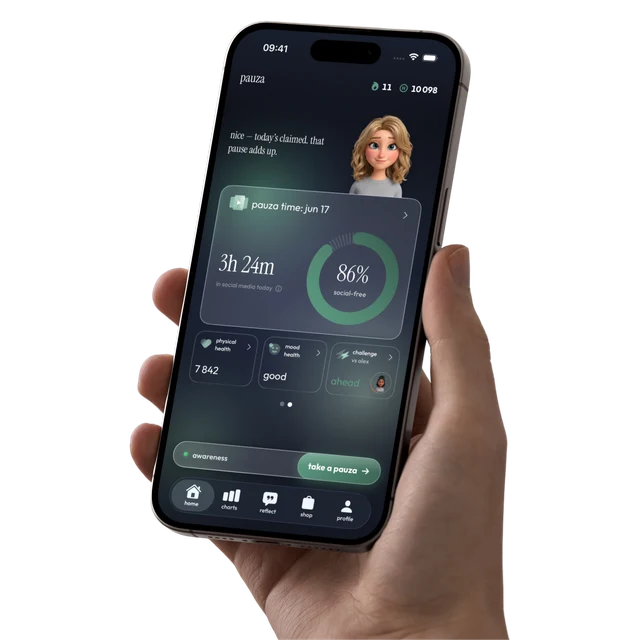
frequently asked questions
Can I limit social media use without deleting apps?
Yes. With iPhone’s Screen Time features, app folders, and small habit changes, you can reduce your usage while keeping the apps installed.
What if I keep reinstalling apps after deleting them?
That’s common. It’s often more effective to add friction instead—move apps off your home screen, set Screen Time limits, or use tools like Pauza to reward time away.
Is it possible to limit social media without strict app blocks?
Absolutely. Adding small hurdles, like requiring a search to open apps or using Downtime for specific hours, often works better than total bans.
How do I stay motivated to cut down on social media?
Involve a friend for accountability, track small wins, and try apps that turn time offline into something positive—like Pauza’s token system.
What’s a realistic goal for reducing social media?
Start with reducing your average by 10–15 minutes per day, or setting device-free periods during key times. Progress is more important than perfection.
Will limiting social media affect my ability to stay in touch?
Not if you’re intentional. Keeping apps but checking them less often lets you stay connected while regaining control over your free time.
free tools
- screen time calculator — see what your daily hours add up to over a year
- average screen time statistics — how your usage compares to the latest data
- phone habit test — a 2-minute check of your phone habits