the 30-day no social media challenge: what to expect

The 30-day no social media challenge means intentionally avoiding all social platforms for a full month. Most people find it harder—and more revealing—than expected. You’ll notice withdrawal, new routines, and changes in mood or focus, but it’s a practical way to reset your relationship with your phone.
The 30-day no social media challenge involves abstaining from all social media platforms for thirty consecutive days. Participants remove or block access to apps and sites, aiming to reset their digital habits, reduce distractions, and observe how time, mood, and attention shift without social feeds.
key takeaways
- Most people experience withdrawal symptoms in the first week, but these usually fade.
- Replacing scrolling with planned activities is key to success and enjoyment.
- Adjusting iPhone settings and using dedicated apps can make the process easier.
- Tracking your time honestly helps reveal patterns and celebrate progress.
why take a 30-day break from social media?
Deciding to start a 30-day no social media challenge is often about more than just curiosity. Many people want to reclaim time, reduce anxiety, or break an automatic scrolling habit. The constant pull of feeds can make it difficult to focus on other areas of life.
According to DataReportal, the average internet user spends 2 hours and 21 minutes on social media every day. That’s over 16 hours a week—time that could be spent on hobbies, sleep, or in-person connection. This challenge is a structured way to see what changes when you remove that daily input.
A month without social media isn’t about quitting forever. It’s a chance to notice what you miss (or don’t), which habits are hardest to break, and how your mood or productivity shifts. Tools like Pauza can help you track your progress and stay motivated, but the biggest changes often come from simple awareness.
- Reclaim time for offline activities
- Reduce digital stress and information overload
- Test your dependence on social apps
what actually happens in the first week
Most people underestimate the initial discomfort of a no social media challenge. The first few days often bring restlessness, habitual reaching for your phone, and a feeling of missing out. These reactions are normal—as with any routine, it takes time to unwind old habits.
You might notice ‘phantom’ notifications or feel compelled to check, even when your apps are deleted or hidden. This is your brain adjusting to the absence of a constant stream of novelty and validation. Some people describe boredom; others notice anxiety or irritability, especially in idle moments.
Recognizing these patterns is crucial. Use this week to observe, not judge. Simple adjustments—turning off notification badges, moving your phone out of reach, or using a screen time calculator to visualize your daily habits—can help make the transition less jarring.

setting up your iphone for success
Making your iPhone less tempting is a practical way to support your 30-day no social media challenge. Start by removing or offloading social media apps. On iOS, you can tap and hold an app icon, select ‘Remove App,’ then choose ‘Delete App’ or ‘Remove from Home Screen’ to hide it.
Next, use built-in iPhone settings to block access. Go to Settings > Screen Time > App Limits, then add limits for ‘Social Networking’ or specific apps. For an extra layer, use ‘Downtime’ under Screen Time to block all but essential apps during certain hours.
Consider changing your lock screen and home screen wallpaper to something neutral—less visual stimulation can reduce the urge to unlock your phone. If you slip up, don’t be harsh on yourself; the goal is to make access less automatic, not to achieve perfection.
- Delete or hide all social media apps
- Set App Limits for social categories (Settings > Screen Time > App Limits)
- Enable Downtime for focused periods without distractions
- Change wallpapers to something calming and neutral
making the most of your reclaimed time
A sudden drop in phone use can leave empty moments in your day. Planning ahead helps you fill those gaps with activities that feel rewarding. Without a feed to scroll, many people rediscover old interests or simply rest more.
Make a short list of alternatives: reading, calling a friend, taking walks, or even doing nothing at all. You don’t need to become ultra-productive—sometimes just being present is enough. Jot down a few options before you start the challenge so you’re not scrambling when boredom hits.
If you’re feeling competitive or want to stay accountable, consider inviting a friend to join you. Apps like Pauza let you turn time away from social media into streaks and friendly bets, making the process more engaging without financial risk.
how your attention, mood, and habits may change
Many people report better focus and calmer moods by the second week of the challenge. Without constant interruptions, it’s easier to stay in the flow with work, studies, or hobbies. You may also notice changes in sleep quality or even your sense of time passing.
However, these shifts are not always dramatic or immediate. It’s common to feel a ‘void’—especially if social media was a source of news, inspiration, or connection. Filling that emptiness with more intentional activities, rather than swapping one app for another, is key.
If you’re curious how your experience stacks up, compare your old routine to the average screen time. For example, the average internet user spends 2 hours and 21 minutes a day on social media, according to DataReportal. Seeing where you started can put your progress in perspective.
- Improved focus and productivity
- Reduced anxiety from fewer notifications
- More restful downtime and better sleep patterns
- A clearer sense of personal priorities
tracking progress and staying honest
It’s easy to lose track of your real progress or fall into new digital distractions. Set a reminder to check your Screen Time data under Settings > Screen Time > See All Activity. Seeing daily and weekly trends helps you notice patterns and celebrate small wins.
Dedicated apps can offer extra motivation. Pauza, for example, rewards you with in-app tokens for every minute you spend away from social media, lets you build streaks, and even compete with friends for the lowest screen time. It’s privacy-conscious—raw usage data stays on your device, and tokens have no cash value.
Be honest with yourself if you slip. The goal isn’t zero screen time, but a more intentional relationship with your devices. At the end of 30 days, reflect: What did you miss? What surprised you? Use these insights to shape your digital habits moving forward.
One thing worth planning before day 30 arrives: the challenge ends sooner than a habit forms. In a University College London field study (Lally et al., 2010), new everyday habits took a median of 66 days to become automatic—so the weeks right after your challenge are where old patterns most often creep back. Mini Loops has a clear breakdown of how long it really takes to form a habit and what to do in that gap between day 31 and true autopilot.
by the numbers
- The average internet user spends 2 hours and 21 minutes on social media every day.— DataReportal, Digital 2025
Ready to see what changes for you? Try Pauza on your iPhone to make your 30-day no social media challenge easier and more rewarding.
Get Pauza on iPhone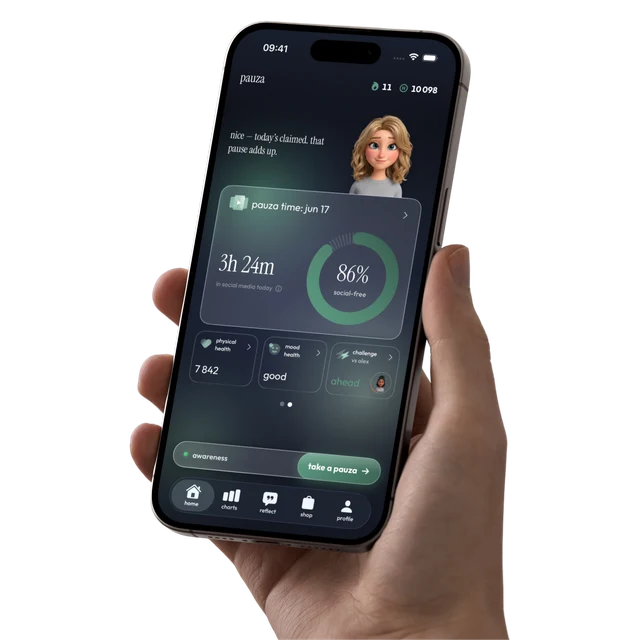
frequently asked questions
Will I lose touch with friends during a 30-day no social media challenge?
Some people worry about missing out, but you can still stay connected through calls, texts, or in-person meetups. Let friends know about your break in advance to avoid confusion.
What if I need social media for work or school?
You can adapt the challenge by only logging in for essential tasks and logging out immediately after. The key is to eliminate recreational or habitual scrolling, not to jeopardize responsibilities.
Are there withdrawal symptoms when quitting social media?
Yes, it’s common to feel restless, bored, or anxious in the first few days. These feelings usually fade as your brain adjusts to new routines.
How can I make the challenge easier on my iPhone?
Use features like App Limits and Downtime under Screen Time settings to block access, and consider removing apps from your home screen. Dedicated apps like Pauza can help track your progress and keep you accountable.
What should I do if I slip up and check social media?
Don’t be hard on yourself. Acknowledge the slip, notice what triggered it, and get back on track. The goal is progress, not perfection.
Can I repeat the challenge more than once?
Absolutely. Some people turn it into a regular reset, repeating the challenge a few times a year or whenever they feel their habits drifting.
free tools
- screen time calculator — see what your daily hours add up to over a year
- average screen time statistics — how your usage compares to the latest data
- phone habit test — a 2-minute check of your phone habits