screen time vs focus: which one should you actually use?

For most people, Apple Screen Time is an easy, free place to start—but it’s easy to bypass. If you want real change, focus apps like Opal or reward-based options like Pauza offer more structure or motivation. The right choice depends on whether you want limits, gentle reminders, or rewards for staying off your phone.
Screen Time apps track and limit your app usage, while Focus apps help you actively reduce distractions through blocking, friction, or rewards. Choosing between them depends on whether you prefer setting limits, enforcing blocks, building awareness, or earning incentives for spending less time on your phone.
key takeaways
- Apple Screen Time is free and simple but easy to bypass for determined users.
- Focus apps vary: some block access, others add friction, track streaks, or offer rewards.
- Pauza is unique for rewarding time off your phone and friendly bets, not hard blocking.
- Check current app prices on the App Store before you commit—costs change regularly.
deciding between screen time and focus apps
When comparing Screen Time vs Focus tools, think about your goals. Do you want to simply see your usage, block apps entirely, introduce pauses, or get motivated by rewards? Each approach works for different people.
Apple Screen Time is built-in and best for awareness or gentle self-limits. Focus apps add layers—like unbreakable blocks, social features, or small incentives for staying off your phone. The right fit depends on how much help you want resisting habits.
If you find yourself tapping 'Ignore Limit' too often, it may be time to try an app with stronger blocking or a more engaging reward system like Pauza.
- Want simple tracking? Start with Apple Screen Time.
- Need hard blocks? Try Opal or Roots.
- Prefer gentle nudges? Apps like one sec or ScreenZen add friction, not walls.
- Motivated by rewards or friendly competition? Pauza and BePresent stand out.
what each app actually does (and who it fits)
Apple Screen Time is free and built into every iPhone—track your use, set app and category limits, or schedule downtime. It's best for anyone starting out, but a single 'Ignore Limit' tap can remove any block.
Opal offers scheduled focus sessions and Deep Focus modes that block chosen apps without easy bypass. It's polished and comes with strong analytics, making it ideal if you want serious blocking and don’t mind paying around $99.99/year—always check the latest price.
BePresent adds focus sessions, 'beast mode' blocking, and streaks, letting you stake money against your own goals. It's for those who like self-competition, but since you only bet against yourself, it can be easy to forgive slips.
one sec uses breathing pauses before each app launch—introducing friction, not a hard block. Good for people who want autonomy, but if you’re determined to scroll, it won’t stop you.
ScreenZen creates progressive delays and scroll interruptions, with basic per-app goals. It's a solid, free option for those who want to break habits without games or social features.
Pauza, meanwhile, takes a rewards-first approach: time off social media earns tokens, you build streaks, and you can bet friends in friendly, head-to-head challenges.
- Apple Screen Time: Best for free, basic tracking.
- Opal: Best for unbreakable blocking and analytics.
- BePresent: Best for self-staked streaks.
- one sec: Best for friction, not force.
- ScreenZen: Best free blocker with no frills.
- Pauza: Best for rewards and friendly competition.

reward-based and social screen time tools
Apps that add a reward or social element work differently than pure blockers. Pauza converts every minute you spend off social media into tokens, which you can use to build streaks or bet against friends—lowest screen time wins the pot. Tokens have no cash value and aren’t gambling, but the game-like nature can motivate some people more than strict blocking.
Other apps, like BePresent, offer streaks and self-stakes, but only Pauza lets you compete directly with friends for a shared outcome. If you need a community push, this can be a strong motivator.
Forest and Focus Friend add a wholesome, session-based reward (planting trees or decorating a virtual room), but they don’t track all-day screen time or offer competitive bets.
hard blockers, gentle nudges, and everything between
Some people need an app that’s impossible to ignore. Opal, Roots, and Brick offer strict blocking—once a session starts, it’s nearly impossible to break without ending the session or, in Brick’s case, tapping a physical tag.
Others prefer friction or awareness. Apps like one sec or ScreenZen add a moment of pause or delay, letting you reflect but not stopping you outright. This suits people who want more autonomy, or who just need a gentle nudge.
A screen time calculator can make your daily hours concrete, helping you compare your habits to the average screen time and set more realistic goals.
how to choose the right app for you
Start by asking what actually motivates you: strict limits, gentle reminders, visible rewards, or friendly competition. Try Apple Screen Time first—it's free and takes seconds to set up from Settings > Screen Time.
If you keep overriding limits, consider a focus app with blocking or friction. If you want to be rewarded for time off, or like the idea of friendly bets, Pauza is a strong fit—especially since it doesn’t count work, maps, or music against you, and your raw data stays on your device.
Always check the App Store for up-to-date prices, as subscriptions and features change regularly.
- Set up Apple Screen Time for basic awareness.
- Identify your main struggle: discipline, motivation, or social support.
- Pick an app that matches—blocker, friction, or rewards.
- Test for a week and adjust if needed.
by the numbers
- The average internet user spends 2 hours and 21 minutes on social media every day.— DataReportal, Digital 2025
Try Pauza on your iPhone to see if rewards and friendly competition help you spend less time on social media. It’s free to start, with privacy kept on your device.
Get Pauza on iPhone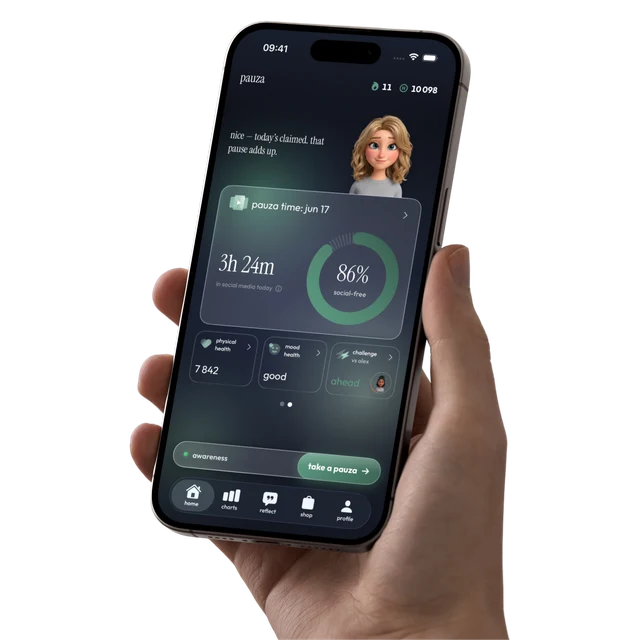
frequently asked questions
What is the difference between Screen Time and Focus apps?
Screen Time apps typically track usage and set limits, while Focus apps actively help you reduce distractions through blocking, adding friction, or rewarding time off your phone.
Is Apple Screen Time enough for most people?
Apple Screen Time is a good starting point because it’s free and built-in, but it’s easy to bypass. If you struggle to stick to limits, a dedicated focus or reward app may help more.
Are there any completely free apps for reducing screen time?
Apple Screen Time and ScreenZen are both free options, though ScreenZen relies on progressive delays rather than strict blocking or rewards.
How does Pauza compare to hard blockers like Opal?
Pauza doesn’t block apps—instead, it rewards time off your phone and lets you compete in friendly bets with friends. Opal is better if you want apps blocked completely and can’t risk distraction.
Can I track work-related app use separately?
Some apps, like Pauza, track per-app usage so work, maps, or music aren’t counted against your downtime. Apple Screen Time also shows per-app stats but applies limits broadly unless you set custom categories.
free tools
- screen time calculator — see what your daily hours add up to over a year
- average screen time statistics — how your usage compares to the latest data
- phone habit test — a 2-minute check of your phone habits
- Pauza vs Opal — a side-by-side look at two different approaches